
Views: 0 Author: Site Editor Publish Time: 2026-08-28 Origin: Site


Boiler throttling and forced outages often trace back to a single, overlooked bottleneck. Bottom ash and slag evacuation failures can cripple thermal power generation financially. When extraction systems stop, burning coal byproducts rapidly accumulate. The slag extraction system acts as a critical single point of failure. Plant managers cannot treat it as a basic utility. If it jams, the entire boiler must derate or shut down completely.
Thermal power plants rely heavily on continuous operation to meet grid demands. Even minor interruptions result in severe financial penalties and operational stress. Upgrading to a modern, meticulously engineered Slag Conveyor fundamentally shifts maintenance protocols. You move away from reactive firefighting toward predictable, scheduled interventions.
Throughout this guide, you will learn how advanced hardware mitigates abrasive wear. We will also explore how intelligent monitoring practically eliminates unplanned downtime. By understanding the intersection of metallurgy and predictive analytics, engineering teams can regain control over their ash handling systems.
Slag handling failures directly correlate to boiler shutdowns; mitigating abrasive and thermal wear is the primary driver of continuous uptime.
A **High Performance Slag Conveyor** integrates advanced metallurgy with automated tensioning to drastically reduce chain snapping and mechanical jamming.
Combining ruggedized hardware with predictive maintenance (AI/condition monitoring) can reduce unplanned outages by shifting them to planned maintenance windows.
Evaluating a system requires balancing load capacity, retrofit footprint compatibility, and water/environmental compliance capabilities.
When ash handling equipment jams, the financial fallout hits immediately. Thermal power plants operate on razor-thin margins and strict grid commitments. A failed evacuation system forces plant operators into difficult, costly decisions.
The cascading financial impact follows a predictable, destructive pattern:
Boiler Derating: Operators must reduce combustion rates to slow ash accumulation. This immediately lowers megawatt output and revenue.
Complete Unit Shutdown: If the jam persists, the boiler must trip offline. Shutting down and restarting a thermal unit wastes massive amounts of fuel.
Emergency Labor Costs: Maintenance teams must work hazardous, unplanned overtime. They often manually clear scalding ash under immense time pressure.
These failures happen because the core vulnerabilities are extreme. The equipment operates in an incredibly hostile environment. It faces continuous exposure to abrasive bottom ash. It endures massive temperature spikes from falling clinkers. It also battles constant corrosion from acidic quench water. Few industrial machines face this combination of thermal, chemical, and mechanical stress.
Because of these harsh realities, claiming "zero maintenance" is unrealistic. No moving metal part survives boiler slag indefinitely. Instead, we must define clear success criteria. The true goal is the complete elimination of unplanned downtime. You want equipment to survive peak demand cycles without sudden failure. Maintenance should only happen when you decide to schedule it.
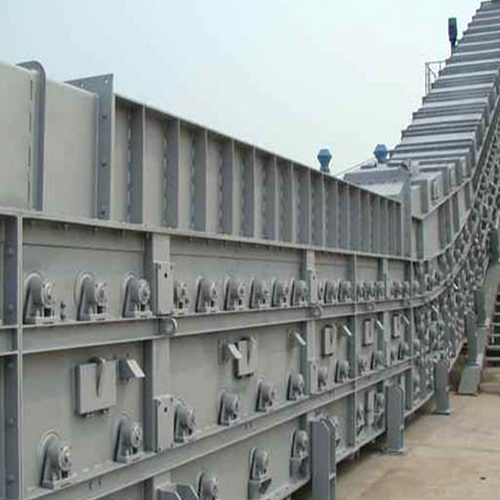
Standard ash handling belts and basic drag chains fail quickly under industrial boiler loads. They lack the specific engineering upgrades required for extreme environments. Investing in a true High Performance Slag Conveyor changes the reliability equation. The hardware differences between standard models and high-performance units dictate your uptime.
Boiler slag acts like liquid sandpaper. When it cools, it forms sharp, glass-like clinkers. Standard carbon steel chains degrade rapidly against this material. A high-performance unit relies heavily on case-hardened steel alloys.
Manufacturers forge these links under massive pressure. Forging aligns the grain structure of the steel. This makes the chain incredibly strong. The outer layer receives a specialized heat treatment. This creates a hardened outer case that resists abrasion. Meanwhile, the inner core remains ductile. This internal flexibility absorbs sudden shock loads when heavy slag falls.
You can tie this material specification directly to plant outcomes. Better metallurgy extends the lifecycle between chain replacements. You experience fewer snapped links. You spend less money on replacement parts. Most importantly, you avoid the sudden boiler trips caused by a severed drive chain.
Chain slack is a massive enemy of continuous operation. As metal links heat up, they expand. As they wear down, they elongate. If a chain becomes too loose, it will derail off the sprocket. If it becomes too tight, it will snap.
Modern systems solve this using hydraulic or mechanical auto-tensioning. These tensioners monitor chain tension continuously. They automatically adjust the tail shaft position in real-time. This active adjustment prevents slack-induced derailments entirely. Your maintenance team no longer needs to manually adjust take-up bearings every shift.
Furthermore, high-end models utilize redundant drive configurations. A standard system relies on a single motor and gearbox. If that motor trips, the entire line stops. A redundant setup features dual drives. If one motor overheats or fails, the secondary drive takes over. The system might operate at a reduced capacity, but it keeps moving. This buys your team critical hours to arrange repairs without shutting down the boiler.
Rugged hardware provides a strong foundation. However, software and intelligent monitoring complete the solution. Pairing heavy-duty mechanics with predictive analytics transforms your maintenance strategy. You can predict failures weeks before they force a sudden shutdown.
Traditional preventive maintenance relies on guesswork. Technicians replace parts based on a calendar, regardless of actual wear. Sometimes they replace perfectly good parts. Other times, parts fail before the scheduled date. Condition monitoring eliminates this uncertainty.
Modern sensors track equipment health in real-time. Vibration analysis detects microscopic changes in bearing performance. If a bearing starts to pit, the vibration signature changes instantly. Thermal imaging cameras monitor gearbox temperatures continuously. They spot friction hotspots long before the oil degrades.
We also utilize motor current signature analysis. When a scraper paddle encounters excessive resistance, the motor draws more current. Algorithms analyze these power spikes. They can distinguish between a normal heavy slag fall and a developing mechanical jam. This insight allows operators to intervene before the shear pin breaks.
Data streams are useless without actionable intelligence. AI-driven predictive models ingest all this sensor data. The software learns the normal operating baseline of your specific equipment. It then calculates the remaining useful life of critical components.
This allows plant managers to practice data-driven outage planning. If the AI detects accelerated chain wear, it alerts the team. You can then schedule a chain replacement or paddle realignment for your next planned plant turnaround. You handle the repair strictly during a scheduled window. You entirely avoid emergency Saturday night call-outs. This predictive approach maximizes overall plant availability.
Selecting the right equipment requires a strict decision framework. Procurement teams and plant engineers must look past generic marketing claims. You need clear metrics to evaluate vendor proposals effectively.
Conveyor Capability Comparison
Evaluation Metric | Standard Legacy Systems | High-Performance Upgrades |
|---|---|---|
Handling Sudden Loads | Frequent stalling; shear pin breaks | Shock-absorbing chains; variable speed drives |
Tension Control | Manual adjustment required | Hydraulic auto-tensioning |
Installation Footprint | Often requires major trench widening | Custom-engineered to fit existing pits |
Dust Emissions | High fugitive dust in dry systems | Sealed submerged cooling process |
Boilers do not discharge ash evenly. Soot-blowing cycles cause massive, sudden avalanches of material. We call these events "slag falls." Your new system must handle these peak loads without stalling.
Evaluate the peak volumetric capacity of the proposed equipment. Ensure the gearboxes provide enough starting torque to move stationary material. The system must also handle extreme thermal shocks. Quench water boils instantly when massive hot clinkers hit it. The structural steel must resist warping under these rapid temperature fluctuations.
Building a greenfield power plant is easy. Retrofitting an aging facility is incredibly difficult. You cannot easily move structural columns or concrete foundations. The new equipment must fit within your existing boiler throat.
Address the reality of footprint constraints early. The upgraded system must integrate into the current ash trench. Vendors must offer scalable designs. They should customize transition chutes and tail sections to match your layout. Minimal structural modification keeps installation costs down. It also keeps the project schedule tight.
Environmental regulations regarding ash handling grow stricter every year. Regulators target fugitive dust emissions and wastewater management heavily. Your new system must help you maintain compliance.
Assess the water sealing capabilities of the proposed equipment. Submerged Scraper Conveyors (SSCs) excel in this area. A continuous water bath quenches the ash instantly. This process prevents any fugitive dust from escaping into the plant atmosphere. It also provides a sealed environment for toxic gases. Evaluate how the system dewaters the ash before discharge. Effective dewatering simplifies downstream transport and reduces landfill disposal costs.
Procuring the equipment is only half the battle. Installing heavy industrial machinery inside an operational thermal plant introduces significant friction points. You must partner with vendors who possess deep experience and trustworthiness.
Power plants run on strict outage schedules. You generally have one brief annual window to perform major upgrades. Sequencing the installation perfectly is mandatory. Project overruns carry massive financial penalties.
Discuss the risk of schedule slippage with your vendor. They must pre-assemble as many components as possible off-site. The delivery logistics must align exactly with your crane availability. If the new system takes too long to install, it delays the boiler restart. Experienced contractors will provide a day-by-day critical path timeline to prevent this.
Initial startup presents unique challenges. You cannot fully test an ash handling system while the boiler is cold. True commissioning happens under live thermal loads.
Technicians face challenges calibrating equipment in a live environment. They must set optimal water levels in the quench bath. They must dial in the automated chain tension parameters. Establishing sensor baselines also takes time. The predictive algorithms need a few days of normal operation to learn the machine's signature. Expect minor adjustments during the first week of live operation.
The best technology fails if human operators reject it. Plant personnel often resist new protocols. They might view automated tensioners with suspicion if they are used to manual adjustments.
Emphasize training from day one. Operators must understand how to read the new predictive dashboards. They need to know what a vibration alert actually means. Train them on the automated tensioning protocols. When the team trusts the data, they make better operational decisions. Good training ensures a smooth transition from legacy manual labor to modern automated oversight.
Upgrading your bottom ash infrastructure is a major capital decision. You cannot buy these systems from a generic catalog. You must navigate the vendor selection process strategically.
Prioritize vendors that offer site-specific engineering. Off-the-shelf catalog solutions rarely succeed in retrofit scenarios. Every boiler produces slightly different slag. Every plant layout features unique geometric constraints.
Demand a site-specific ash flow analysis. The vendor should calculate your exact hourly slag production. They should analyze your soot-blowing schedule. They must prove their design handles your specific peak load events. Look for partners who send engineers to walk down your facility before submitting a proposal.
Do not wait for your current equipment to suffer a catastrophic failure. Reactive decisions are always more expensive. Start the evaluation process during a period of stable operation.
Reach out to a specialized engineering firm today. Request a comprehensive site audit or feasibility study. Ask them to calculate a specific return on investment based on your plant’s historical downtime data. By quantifying the cost of your past forced outages, you build a bulletproof business case for a high-performance upgrade.
A: Preventing one or two unplanned boiler shutdowns typically offsets the initial investment entirely. Most thermal power plants see a full return on investment within 18 to 36 months. This timeline heavily depends on plant capacity and local energy market rates. Eliminating emergency labor and reducing replacement part frequency accelerates these savings.
A: Yes, technicians can retrofit sensors onto existing setups. However, they only monitor degradation. Sensors cannot fix fundamental metallurgical flaws or structural deficiencies in aging equipment. If your current chains snap constantly due to poor material quality, sensors will merely alert you that they are failing again. You still need durable hardware.
A: Submerged systems provide continuous cooling and excellent dust suppression. This rapid cooling fractures the slag, making it easier to transport and reducing jam risks. Dry systems offer mechanical simplicity. However, they carry higher heat-stress risks for internal components. Over time, unmitigated thermal expansion in dry systems can increase unplanned downtime.

