
Views: 0 Author: Site Editor Publish Time: 2026-08-28 Origin: Site


Bottom ash and slag handling present brutal operational realities. Extreme temperatures, heavy impact loads, and severe abrasion constantly attack equipment. These harsh conditions push machinery to absolute limits. Unplanned downtime in any continuous process facility is incredibly cost-prohibitive. Ultimately, the reliability of a Slag Conveyor heavily depends on its internal moving parts. The metallurgical and mechanical integrity of its chain and scraper assemblies dictates true success. When these components fail, production stops entirely. We aim to provide plant managers and engineering teams with a clear evaluation framework. You will learn how to assess chain and scraper configurations properly. This guide explores material selection, design mechanics, and system integration thoroughly. By understanding these critical factors, you can maximize operational uptime. You can also minimize emergency repair events effectively. Let us explore how to optimize these critical components for long-term operational success.
Component synergy is critical: System reliability depends not just on chain strength, but on the precise matching of chain hardness to scraper profiles and sprocket materials.
Surface hardness must be balanced with core toughness to prevent catastrophic brittle failure under heavy slag surges.
A High Performance Slag Conveyor focuses on predictable wear curves rather than unrealistic "zero-wear" claims, enabling scheduled maintenance rather than emergency repairs.
Vendor evaluation should prioritize verifiable metallurgical certifications and real-world system integration expertise over baseline upfront component costs.
Unexpected chain snapping creates immediate chaos on the plant floor. Scraper deformation causes similar operational disruptions. Both issues bring severe financial consequences. Lost production revenue adds up incredibly fast during outages. Emergency labor rates drain maintenance budgets rapidly. Workers also face significant safety hazards during these forced emergency repairs. Clearing jammed hot slag manually exposes teams to extreme environmental dangers. Evaluating equipment requires a change in perspective.
Shift your evaluation metric from the initial purchase price immediately. Focus heavily on Mean Time Between Failures (MTBF). True success requires maximizing operational uptime continuously. Evaluating upfront costs alone ignores massive hidden operational penalties. High-quality components extend your MTBF significantly. They keep your production lines running smoothly.
Common failure modes constantly threaten these material handling systems. We can categorize the main threats easily:
Abrasive Wear: Continuous friction removes surface material steadily. This directly causes chain elongation and pitch mismatch.
Corrosion Fatigue: Chemical reactions weaken the metal structures over time. Cooling water mixed into ash creates harsh acidic environments.
Mechanical Jamming: Warped or bent scrapers wedge against the trough. This suddenly locks the entire drive mechanism.
Identifying these specific threats early prevents catastrophic breakdowns. You must engineer defenses against each distinct failure mode.
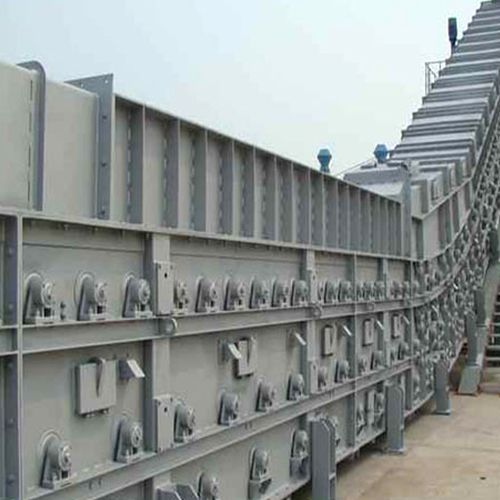
Metal selection dictates the baseline reliability of your entire system. Specialized alloys remain absolutely essential for high-temperature environments. Standard carbon steels degrade rapidly under continuous slag abrasion. Case-hardened manganese steel performs exceptionally well here. Boron steel also provides excellent resistance against highly abrasive materials. These specific alloys withstand continuous friction from sharp, glassy slag particles. Industry standards require these specialized chemical compositions for heavy-duty applications.
However, buyers face a strict hardness versus brittleness trade-off constantly. Extreme surface hardness resists abrasive wear perfectly. Yet, this hard exterior desperately needs a ductile core. A flexible inner core absorbs massive shock loads effectively. Falling bulk slag generates tremendous sudden impacts on the chain links. Avoid vendors claiming maximum hardness without detailing their core toughness data. Brittle chains snap easily under heavy operational surges. We see this common mistake across many underperforming facilities.
Manufacturing standards also require strict technical scrutiny. Calibrated heat treatments ensure consistent metal properties across every link. Precision robotic welding prevents weak joints. Always ask your vendors for verifiable testing data. Request recent breaking load tests. Demand specific fatigue limit data for their products. This evidence proves real-world metallurgical integrity. Do not accept vague marketing promises regarding material strength. Hard data prevents costly failures.
Scraper physical shape determines your material clearing efficiency directly. The flight profile must push heavy, dense loads smoothly. Proper geometry prevents material fallback along the incline. Carryback significantly reduces overall system capacity. It also increases parasitic wear on the return path. Engineers must optimize scraper height and angle carefully. This ensures maximum material transfer per revolution.
Attachment mechanisms require careful evaluation during the design phase. You must weigh different fastening systems carefully based on operational goals.
Common Best Practice: Match your attachment type to your maintenance capabilities.
Welded attachments offer immense permanent structural strength. However, they complicate replacement procedures significantly. Crews must cut and re-weld parts in harsh conditions. Bolted or pin-and-lock systems reduce maintenance downtime dramatically. Crews can swap worn parts much faster. Yet, bolted systems demand robust shear-pin designs. These pins prevent loosening during heavy vibration. They also shear cleanly if a massive jam occurs. This protects the main chain from snapping.
Deflection resistance remains another crucial engineering factor. Scrapers must withstand intense lateral forces during operation. Uneven slag loading pushes scrapers sideways constantly. Bending directly leads to severe tracking issues. A bent flight often causes catastrophic chain derailment. Engineers must design scrapers to maintain absolute rigidity under maximum load. Using reinforced gussets helps achieve this necessary structural stiffness.
Scraper Attachment Mechanism Comparison
Mechanism Type | Maintenance Speed | Structural Integrity | Best Use Case |
|---|---|---|---|
Welded Flight | Slow (Requires Torch/Welder) | Very High | High-impact continuous zones with rare replacements. |
Bolted Assembly | Fast (Wrench required) | Moderate to High | Facilities requiring quick scheduled swaps. |
Pin-and-Lock | Very Fast (Tool-less often) | High | Advanced systems prioritizing maximum uptime. |
Component synergy defines true reliability in material handling. A High Performance Slag Conveyor requires perfectly matched pitch dimensions everywhere. The chain and the drive sprockets must align flawlessly. Mismatched wear rates here accelerate chain elongation rapidly. Sprockets grinding against misaligned chains destroy both parts quickly. This chordal action vibration damages gearboxes eventually. You must source chains and sprockets engineered as a unified pair.
Tensioning systems manage this evolving mechanical relationship daily. Automated or hydraulic tensioning mechanisms provide critical operational support. They compensate for thermal expansion seamlessly as temperatures fluctuate. Natural chain stretch also occurs during normal operation. Hydraulic tensioners keep the chain perfectly taut automatically. Gravity take-ups often fail to react quickly enough. Automated systems prevent slack from bunching near the drive sprockets.
Wear strips and trough design play vital roles too. Stationary components interact constantly against the moving scrapers. Bottom plates require specialized, hardened materials. Basalt tiles or Hardox steel liners reduce friction significantly. Lower friction directly reduces overall electrical power consumption. This smooth interaction extends the lifespan of the entire assembly. Poorly designed troughs wear out premium chains prematurely.
Predictive maintenance recognizes that physical wear remains entirely inevitable. Abrasive environments eventually degrade all exposed metals. Reliable systems are designed purely for predictability. Scheduled maintenance always costs less than chaotic emergency repairs. You must map out the expected wear curve realistically.
Monitoring technologies help track this degradation accurately. Consider integrating these tools into your infrastructure:
Load Sensors: Detect sudden spikes in motor resistance instantly.
Thermal Monitoring: Flags abnormal friction heat along the trough housing.
Visual Inspection Ports: Allow safe, quick physical checks during operation.
Laser Alignment Tools: Verify sprocket tracking precisely during shutdowns.
These advanced tools track chain elongation before complete failures occur. They alert your team to schedule interventions proactively.
Adoption risks require careful consideration during any upgrade project. Retrofitting new chains into older, uneven troughs presents massive dangers. Unevenly worn troughs destroy new components incredibly fast. Heavily grooved wear plates act exactly like grinding wheels. We emphasize holistic system audits prior to component replacement. Assess the entire trough path carefully. Never install premium chains into a compromised, wavy steel housing. Replace heavily worn liners simultaneously to protect your new investment.
Trustworthy suppliers prioritize vendor transparency above all else. They provide clear assumptions about expected component lifespans upfront. These estimates should reflect your specific material loads precisely. Operating hours must factor heavily into their calculations. Avoid suppliers promising indefinite lifespans in abrasive ash handling. Realistic engineering depends on measurable degradation rates.
Look closely at available engineering support during vendor selection. Top manufacturers offer custom scraper profiling services. They adapt designs based on your specific slag density. Temperature variations also influence these custom mechanical profiles. A generic catalog part rarely solves complex localized wear issues. You need partners who study your specific facility constraints.
Next-step actions require immediate, focused attention. We recommend conducting a comprehensive wear analysis today. Measure your current chain elongation percentages accurately. Document the deepest wear grooves inside your trough. Use this critical analysis as your baseline metric. Draft a precise Request for Proposal (RFP) afterward. Demand clear material certifications in your RFP documents. Insist on exact MTBF projections based on your provided data.
Investing in superior chain and scraper engineering pays massive dividends. Better design choices guarantee facility uptime and profitability. This investment also dramatically improves worker safety on the floor. Unplanned breakdowns drain facility resources and morale rapidly.
Remember the core evaluation framework outlined throughout this guide. Prioritize deep metallurgical integrity first. Ensure robust mechanical design principles prevent jamming. Focus heavily on system-wide component integration. Perfect chains fail inside terrible troughs.
Take proactive steps to evaluate your current setup immediately. Schedule a technical assessment of your current slag handling system today. Request a material compatibility consultation from a trusted engineering partner. Stop reacting to breakdowns and start engineering predictable reliability.
A: Industry-standard thresholds typically sit around 2% to 3% maximum elongation. Beyond this strict limit, replacement becomes absolutely mandatory. Running highly elongated chains causes severe sprocket damage. It also increases the risk of sudden snapping under load. Regular measurement prevents this catastrophic damage.
A: Implement a realistic preventative maintenance schedule based on operational volume. Visual inspections should occur weekly through safe viewing ports. Comprehensive physical inspections measuring thickness and deflection should happen monthly. Adjust this frequency if you process unusually abrasive or dense slag volumes.
A: This depends entirely on your current trough wear. Mating brand new chains with heavily grooved wear plates accelerates damage rapidly. The old grooves act like abrasive files. Always conduct a trough audit. You usually need to replace liners when installing new moving components.
A: Round link chains possess a natural self-cleaning ability. They shed abrasive particles easily as they move over sprockets. They also offer multi-directional flexibility. Roller chains have too many small crevices. Ash packs into roller pins quickly, causing them to seize and snap.

