
Views: 0 Author: Site Editor Publish Time: 2026-08-28 Origin: Site


Slag represents a harsh engineering reality in modern industrial plants. It remains incredibly abrasive. Its physical state directly dictates equipment lifespan. Specifically, the particle size distribution (PSD) controls how this material interacts with moving machinery. PSD acts as the primary variable for operational uptime.
Selecting a standard material handling system often causes severe plant problems. Ignoring thorough particle size analysis guarantees accelerated wear rates. You will face premature bearing failure. You will also experience costly unplanned downtime. Standard systems simply cannot survive such brutal, unyielding operating environments.
You must design your system based on exact material characteristics. This analytical approach bridges the critical gap between capital expenditure and long-term efficiency. By examining the precise nature of the slag, you ensure reliable daily operation. Readers will learn how particle dynamics impact equipment survival. We will explore specific architectural solutions for varying slag sizes. You will discover practical methods to evaluate the right equipment. You will also learn how to specify a robust system for your facility.
Abrasive Mechanics: Fine slag particles act as a grinding compound on moving parts, requiring enclosed, sealed designs, whereas coarse slag creates point-loading impact stress requiring heavy-duty structural reinforcement.
Design Alignment: Standard conveyors fail rapidly in slag applications; precise particle analysis dictates whether an apron, vibratory, drag chain, or specialized steel belt system is required.
Total Cost of Ownership (TCO): Matching conveyor specifications to particle size reduces maintenance intervals and directly improves Mean Time Between Failures (MTBF).
Specification Imperative: Procurement teams must provide vendor-agnostic particle size and temperature data to evaluate and shortlist a High Performance Slag Conveyor.
Slag types vary wildly across different metallurgical processes. Granulated blast furnace slag presents entirely different mechanical challenges than heavy ladle slag. We must treat each variant as a distinct threat. Some forms resemble coarse sand. Others emerge as massive, jagged boulders. These physical differences demand unique engineering responses. You cannot apply a universal approach to slag transport. Understanding the exact mechanical threat prevents catastrophic equipment failure.
Fine slag creates a highly dangerous "grinding paste" effect. Ground Granulated Blast-furnace Slag (GGBS) exemplifies this problem perfectly. These tiny particles readily mix with ambient plant moisture. They also aggressively bind to industrial lubricants. This abrasive mixture effortlessly infiltrates conventional bearing seals. It accelerates component degradation rapidly. The paste acts like liquid sandpaper inside moving joints. Regular seals offer zero protection against this microscopic invasion.
Large pieces introduce severe impact dynamics to your equipment. Heavy, jagged particles cause massive localized stress upon impact. Engineers call this phenomenon point-loading. This concentrated stress batters transport belts. It warps metal pans and snaps drive chains during transfer operations. Standard structural frames quickly deform under repeated heavy impacts. You must reinforce loading zones heavily to absorb this kinetic energy safely.
Temperature behavior links closely to particle size. Large lumps retain extreme core heat significantly longer than fine granules. This delayed cooling directly impacts your structural material choices. A reliable Slag Conveyor needs specific heat-resistant alloys. Standard carbon steel warps quickly under prolonged thermal exposure. Fine particles dissipate heat rapidly, but lumps act like glowing coals. Your system must handle these intense thermal gradients without buckling.
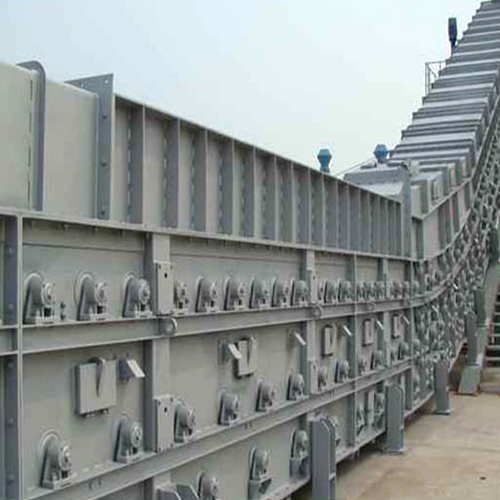
Enclosed drag chain conveyors excel in managing fine particles. They provide exceptional dust mitigation throughout the plant. They actively prevent dangerous environmental contamination across your facility. These fully sealed units keep airborne abrasives contained safely. Modified bucket elevators also work extremely well for vertical transport needs. They require strict, specialized sealing protocols. These upgrades stop abrasive dust ingress into the elevator drive mechanics.
Heavy lumps demand robust, heavy-duty engineering solutions. Steel belt and apron conveyors offer incredible impact tolerance. They easily handle heavy, abrasive lumps dropping from significant heights. They also remain highly resilient against high radiant temperatures. Vibratory conveyors present another excellent transport option. They handle hot, abrasive materials effectively. They practically eliminate sliding friction between the slag and the conveying deck.
Choosing the right architecture requires exacting precision. Your design must align perfectly with the maximum expected lump size. This alignment ensures critical structural integrity during loading. It must also account for the total percentage of fines in the mix. This ratio dictates your internal sealing needs. It also defines your facility dust control requirements. Balancing these factors guarantees a successful installation.
You must evaluate replaceable wear components carefully. Abrasion-resistant (AR) steel and ceramic liners remain highly popular choices. Select your liner based on specific particle velocity. You must also consider the base material hardness. Ceramic liners resist sliding abrasion incredibly well. AR steel handles heavy impact forces much better. A smart strategy uses mixed materials across different wear zones.
Material size strictly dictates optimal operating speeds. Coarse slag requires wider, slower-moving equipment. Slower belt speeds drastically minimize impact wear on plates. Fine slag moves much faster safely. However, faster speeds demand rigorous, active dust suppression systems. Pushing high volumes of fines at high speeds creates massive dust clouds. You must balance speed, volume, and environmental safety perfectly.
Motors and tensioners require highly precise sizing. They must handle variable bulk densities effortlessly. Inconsistent particle sizes cause dramatic, sudden load shifts. These shifts stress gearboxes heavily. A robust High Performance Slag Conveyor manages these dynamic shifts seamlessly. It prevents stalling under heavy loads. It also stops chains from snapping during sudden jams.
Plant personnel safety remains paramount above all else. You must actively manage silica dust exposure from fine particles. You must also contain dangerous high-radiant heat from coarse lumps. Meeting strict OSHA, EPA, or local industrial standards requires proactive engineering. Install dedicated ventilation ports. Use thick thermal shielding around walking paths. Do not treat safety compliance as an afterthought.
Common Safety Failures to Avoid:
Ignoring ventilation needs around fine powder transfer points.
Using standard rubber seals near high-radiant heat zones.
Failing to interlock access doors for hazardous moving parts.
Table: Operational Parameters Based on Particle Size
Material Category | Typical Bulk Density | Recommended Speed | Primary Wear Mechanism |
|---|---|---|---|
Fine Slag (e.g., GGBS) | Dense & Uniform | Moderate to Fast | Micro-abrasion & Seal Infiltration |
Coarse/Lump Slag | Highly Variable | Slow | Impact & Point-loading |
Mixed-Size Slag | Inconsistent | Moderate | Combined Impact and Micro-abrasion |
You can waste capital quickly by over-specifying equipment. Specifying a massive heavy-duty apron feeder for exclusively fine, cool slag inflates costs unnecessarily. It drives up daily power consumption tremendously. It also makes routine maintenance overly complicated. Heavy components require cranes to lift. Oversized motors draw excessive startup current. Massive steel pans add unnecessary dead weight to the drive chain. Match the machinery to the actual physical requirement.
Cutting corners brings immediate, disastrous results. Utilizing standard rubber belts for mixed-size slag creates massive vulnerabilities. Sharp, large particles will cause catastrophic tearing instantly. Hot lumps will melt through standard rubber. Repairing torn belts halts plant production entirely. The money saved upfront vanishes during the first unplanned outage. Always specify industrial-grade materials for these harsh environments.
Physical accessibility dictates long-term mechanical success. Maintenance teams must replace sacrificial wear plates easily. They need clear, safe access to fix jams caused by oversized lumps. Dismantling the entire production line for routine maintenance is unacceptable. Demand access doors on enclosed systems. Ensure engineers design sufficient clearance around drive components. Good engineering respects the mechanic's time and safety.
Essential Maintenance Features:
Quick-release inspection hatches on enclosed casings.
Externally mounted bearings to prevent dust contamination.
Segmented drive sprockets for rapid replacement.
Be highly wary of vague vendor promises. "One-size-fits-all" slag solutions rarely work in industrial reality. Reliable design absolutely requires site-specific material testing. Demand empirical test data before approving any structural design. Vendors should test your specific slag in their lab. If a manufacturer refuses material testing, find a different partner. Transparency prevents expensive commissioning failures.
Procurement teams hold significant project responsibility. They must provide highly accurate data to manufacturers. Vague inquiries yield useless proposals. Provide this explicit checklist of information to ensure accurate engineering:
Comprehensive Particle Size Distribution (PSD) curve.
Absolute maximum lump size dimensions.
Measured bulk density variations.
Exact moisture content percentages.
Detailed thermal and temperature profiles.
Scrutinize incoming quotes intensely. Look for specific metallurgical grades in all proposed wear components. A trustworthy vendor explains exactly why they chose a specific steel grade. They provide Brinell hardness numbers for their wear liners. Reject proposals lacking exact material specifications. Demand specified Mean Time Between Failures (MTBF) guarantees in writing. Ensure the proposal includes explicit maintenance access features.
Never finalize expensive designs on assumptions alone. Initiate a thorough material testing phase immediately. Work closely with your shortlisted vendors. Use this phase to validate all operational assumptions. This crucial step secures your capital allocation safely. It proves the equipment works before you install it. Act decisively to demand empirical proof of concept.
The long-term reliability of a material handling system depends entirely on proper engineering. Its design must strictly respect the physical realities of the material. Particle size and abrasiveness dictate every successful architectural choice you make. Ignoring these variables guarantees rapid mechanical failure.
Do not rely on generalized equipment catalogs. They rarely account for extreme, high-abrasion operating environments. Plant engineers and buyers must prioritize empirical material data. Use exact particle measurements to drive your purchasing decisions. Partner with vendors who understand the severe demands of your specific application. Take immediate action to audit your current material characteristics before launching a new project.
A: Fine slag causes intense micro-abrasion. These tiny particles easily migrate past standard mechanical seals. Once inside, they contaminate the grease. This creates a highly abrasive grinding paste that rapidly destroys bearing surfaces.
A: Handling both extremes efficiently is difficult and expensive. It usually requires a highly specialized steel belt or heavy-duty apron design. You will need dual-layer sealing mechanisms. Engineers often recommend upstream screening to separate the materials instead.
A: Particle size directly changes bulk density. Fine slag is often denser, requiring significantly higher starting torque. Coarse slag loads unevenly across the belt. This uneven distribution requires robust power reserves to prevent the motor from stalling under heavy point-loads.
A: Wear-life lacks a universal standard because operating conditions vary wildly. Lifespan depends entirely on the thickness of AR steel liners and operating speeds. Slower speeds and thicker sacrificial liners extend life reliably. Avoid vendors offering definitive but unverifiable timeframe guarantees.

