
Views: 0 Author: Site Editor Publish Time: 2026-08-28 Origin: Site


Handling bottom ash and boiler slag presents a severe engineering challenge for power facilities. Material temperatures routinely exceed 800°C to 1000°C. Operators must also manage extreme abrasiveness and highly corrosive byproducts daily. Relying on standard bulk material handling equipment for these harsh conditions is a dangerous mistake. Conventional conveyors rapidly suffer catastrophic failure under such extreme stress. This equipment breakdown leads directly to unplanned downtime and serious safety hazards inside thermal facilities. Fortunately, purpose-built systems offer a reliable solution for plant managers. You will learn how modern conveyors utilize specialized cooling mechanisms, hardened metallurgy, and heavy-duty drive systems. These intelligent designs manage thermal loads effectively. Implementing these innovations guarantees continuous, safe operations across waste-to-energy and power generation plants.
Bottom ash requires specialized handling to mitigate extreme thermal shock, structural warping, and rapid abrasive wear.
The primary method of heat mitigation is through either submerged wet quenching (Submerged Scraper Conveyors) or controlled dry cooling systems.
A High Performance Slag Conveyor integrates abrasion-resistant (AR) steel alloys, specialized drag chains, and sealed housings to extend operational life.
Evaluating a system requires looking beyond initial capital expenditure (CapEx) to total cost of ownership (TCO), focusing on chain wear life, maintenance accessibility, and energy efficiency.
Understanding the exact nature of bottom ash is crucial for facility operators. This material possesses unique physical and chemical characteristics. It ranks extremely high on the Mohs hardness scale. This high hardness level causes rapid abrasive damage to standard metals. Bulk density is also exceptionally heavy compared to standard industrial aggregates. Furthermore, ash particles often fuse together inside the furnace. They form massive, heavy clinkers. These large chunks create immediate blockages in unprepared transport systems.
The heat challenge remains the most destructive element. Ash drops directly from the furnace grate at extreme temperatures. The thermal dynamics are intense. Steel components experience immediate thermal shock upon contact. This sudden heat transfer degrades inferior materials instantly. Equipment must absorb and dissipate this energy rapidly to survive.
Standard transport systems fail quickly under these conditions. Several specific failure modes occur frequently:
Rubber Belt Degradation: Conventional belts melt or catch fire upon contact.
Bearing Seizure: Intense radiant heat bakes away standard lubrication entirely.
Casing Warpage: Thin steel housings warp permanently due to uncontrolled thermal expansion.
Chain Snapping: Standard tensile chains stretch and break under heavy clinker loads.
Facilities cannot rely on generic equipment. Specialized engineering is mandatory to handle these physical realities.
Cooling the material quickly is the primary function of these systems. Engineers deploy two main methodologies. Both approaches offer unique advantages for thermal plants.
Wet quenching is a traditional and highly effective method. The hot ash falls directly into a large water bath. This water bath cools the material instantly. The sudden temperature drop fractures large clinkers into smaller, manageable pieces. Additionally, the water creates a physical seal. This water seal maintains the necessary draft pressure inside the boiler above.
However, operators must weigh several considerations. Wet systems require continuous water treatment. Treating this wastewater adds ongoing operational burdens. Corrosion risks increase significantly due to the constant moisture. Finally, the resulting ash product is wet and extremely heavy. Transporting this soaked material requires more mechanical power.
Dry systems represent a modern approach to material cooling. Ambient air is drawn counter-current to the ash flow. This steady airflow cools the material gradually. More importantly, this process recovers thermal energy. The heated air flows back into the boiler. This thermal recovery improves overall boiler efficiency.
Dry systems involve higher initial engineering complexity. Despite this, ongoing maintenance often decreases. You eliminate water-induced corrosion completely. Furthermore, dry ash is much easier to handle downstream. Plants can easily recycle or sell dry ash. Construction companies frequently purchase it for infrastructure and cement use.
Feature | Wet Quenching System | Dry Cooling System |
|---|---|---|
Cooling Medium | Water Bath | Ambient Air |
Boiler Efficiency | Neutral | Improves (Thermal Recovery) |
Corrosion Risk | High | Low |
End Product State | Heavy, Wet Ash | Light, Dry Ash |
Recycling Potential | Requires Drying | Ready for Immediate Sale |
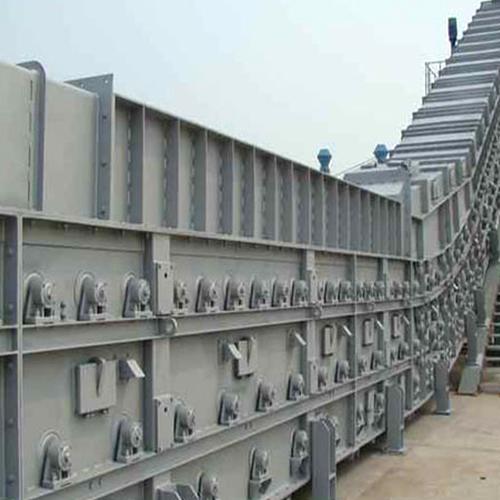
A true High Performance Slag Conveyor requires superior material science. You cannot compromise on structural integrity. Engineers focus heavily on metallurgy to combat abrasion.
Manufacturers utilize specialized abrasion-resistant materials extensively. Hardox steel is a standard requirement for wear zones. Engineers also apply chromium carbide overlays to critical surfaces. These specialized materials protect the flights, base plates, and side walls. They extend the operational life of the equipment dramatically. Standard carbon steel simply disappears under the constant grinding of boiler slag.
The drag chain design is another critical specification. Heavy-duty applications demand superior chain engineering. Experts generally prefer forged link chains over standard round link chains. Forged links offer a larger surface area. This broader surface handles high-tension and abrasive conditions better. Managing chain elongation is also vital. The design must accommodate specific thermal expansion tolerances. If tolerances are too tight, the chain binds. If they are too loose, the system derails.
Casing and sealing mechanisms require precise manufacturing. Housings must remain completely airtight and watertight. Proper sealing maintains boiler efficiency by stabilizing internal pressures. It also prevents fugitive dust from escaping into the facility. Furthermore, strict sealing blocks toxic gas leaks. This protects plant personnel and ensures environmental compliance.
Different facilities generate different types of slag. Equipment designs must adapt to these specific environments. Waste-to-energy and power plants face unique operational hurdles.
Waste-to-Energy (WtE) and biomass plants present difficult conditions. Municipal solid waste (MSW) produces ash featuring an inconsistent composition. You will find melted glass, metals, and unburned materials. This specific mixture is highly corrosive. A robust Slag Conveyor must handle these unpredictable loads without jamming. Biomass ash also contains unique chemical properties. It requires specialized alloys to prevent rapid chemical degradation.
Coal and fossil fuel plants operate on a different scale. These facilities generate massive volumes of boiler slag daily. High-capacity transport is the primary goal here. These plants also focus heavily on secondary recycling markets. The equipment prepares bottom ash for resale. Construction buyers use this slag as a cement additive or road aggregate. The equipment must deliver a consistent end product to satisfy these buyers.
Compliance and sustainability drive modern equipment upgrades. Environmental regulations grow stricter every year. Facilities must meet stringent zero-liquid discharge (ZLD) mandates. Dry cooling systems help plants achieve ZLD compliance easily. Proper sealing also ensures facilities meet strict air emission standards. The right equipment choices keep plants legally compliant and operational.
Evaluating your maintenance vulnerabilities is a mandatory engineering step. Unexpected conveyor failure stops the entire plant. You must understand the true impact of system downtime.
The math regarding downtime is straightforward but severe. When a standard bulk conveyor fails, boiler operations must cease. This production loss costs thousands of dollars per hour. Upgrading to premium, wear-resistant components prevents these catastrophic halts. The initial upgrade price is minor compared to extensive unplanned outages. Reliable equipment guarantees steady revenue generation.
Predictive maintenance integrations change how facilities operate. Modern systems rely on smart technology. Engineers install continuous load monitoring sensors. They also deploy thermal sensors along the casing. These tools alert operators before a catastrophic failure occurs. Automated chain tensioners are another vital integration. They automatically adjust slack as the chain wears down. This prevents sudden derailments during peak operation.
Accessibility dictates your planned maintenance success. Routine inspections should not require extensive teardowns. Evaluating design choices is critical. Look for strategically placed inspection doors. Insist on replaceable slide-out wear liners. These intelligent design choices reduce necessary labor hours drastically. Your maintenance team can complete repairs quickly during scheduled plant outages.
Selecting the right equipment requires a structured procurement approach. You must match equipment capabilities to your specific facility needs. Follow these critical steps when evaluating new systems.
Define Baseline Requirements: Start by mapping your facility constraints. Match your ideal cooling type (wet or dry) to your plant's water availability. Consider your long-term ash recycling goals. If you plan to sell the material, dry systems often prove superior.
Demand Proven Field Data: Never accept theoretical performance claims. Ask vendors for proven field data in similar thermal applications. Request specific Mean Time Between Failures (MTBF) statistics. Reliable vendors will share their operational track records willingly.
Evaluate Custom Engineering Capabilities: Standardized equipment rarely fits perfectly. Your vendor must possess strong custom engineering skills. They need to retrofit the new equipment into your existing boiler footprints safely. Poor integration leads to chronic mechanical issues.
Assess Aftermarket Support: Equipment will eventually wear down. You must ensure robust aftermarket support exists. Verify the availability of spare parts for all high-wear items. Waiting months for a replacement chain is unacceptable for power facilities.
Following this framework ensures you select a durable, high-performing system. It eliminates vendors who lack heavy industrial experience.
Handling high-temperature bottom ash remains a severe engineering challenge. It is never a simple bulk transport issue. Specific cooling methodologies and robust material science resolve these extreme conditions effectively. Hardened metallurgy and smart chain designs keep thermal plants running safely. Your facility needs specialized, heavy-duty solutions to avoid catastrophic breakdowns.
We encourage plant engineers and procurement teams to take immediate action. Conduct a thorough facility audit of your current material handling bottlenecks. Document your maintenance labor hours and downtime frequency accurately. Gather this vital data before submitting RFQs to equipment manufacturers. A data-driven approach guarantees you procure the exact system your plant requires.
A: These systems handle extreme intake temperatures ranging from 800°C to 1000°C. Submerged wet quenching or counter-current dry air cooling immediately reduces this heat. The mechanisms drop the material temperature to safe handling levels instantly. This ensures the ash is cool enough before it reaches subsequent downstream processing steps.
A: Highly abrasive ash wears chains down steadily. However, predictive tensioning and forged alloy links extend life spans significantly. You can typically expect heavy-duty chains to last three to five years. This timeframe assumes continuous plant use and adherence to proper maintenance schedules.
A: Bottom ash equipment handles heavy, hot, clunky material dropping directly from the furnace bottom. This requires rugged mechanical drag systems. Conversely, fly ash consists of fine, lightweight particulates captured in baghouses. Facilities usually transport fly ash using enclosed pneumatic vacuum systems.
A: Yes, but it requires significant engineering work. You must structurally modify the boiler throat entirely. Operators also need to upgrade draft fan capacities to handle the new air flows. Finally, you must adjust downstream material storage. Thorough feasibility studies are mandatory before beginning.

