
Views: 0 Author: Site Editor Publish Time: 2026-08-01 Origin: Site


Ash handling environments are among the most abrasive and demanding industrial applications. Equipment failure here directly translates to costly downtime, safety hazards, and environmental non-compliance. Standard valves frequently fail when exposed to the abrasive nature of fly ash or the heavy hydraulic thrust of bottom ash hoppers. This leads to jammed gates, compromised seals, and maintenance bottlenecks. Specifying the correct isolation gates requires a deep understanding of mechanical operation, failure modes, and the specific demands of your facility's Ash Handling System (AHS). This guide breaks down how these gates function. We provide a technical framework for evaluating and selecting the right solution for your plant.
Application-Specific Design: Isolation gates must be engineered specifically for either the dry, fluid-like nature of fly ash or the wet, heavy, and thrust-heavy environment of bottom ash.
Actuation Matters: A high-performance pneumatic isolation gate offers rapid, reliable actuation critical for automated systems, but requires precise sizing to overcome static ash columns.
Seal Integrity is Paramount: The primary differentiator between commodity valves and engineered isolation gates is the ability to cut through standing material while maintaining a dust-tight or water-tight seal.
The primary purpose of isolation gates is to provide absolute, reliable shut-off. They isolate hoppers, silos, or pneumatic conveying lines for maintenance or batch processing. In power generation and heavy industrial facilities, ash must be continuously removed from boilers and precipitators. When a downstream component requires service, or when a transfer vessel needs to be sealed for pressurization, the gate acts as the primary barrier. It must hold back tons of material and maintain a perfect seal against severe pressure differentials.
You cannot use a one-size-fits-all approach when dealing with ash. The physical properties of the material change drastically depending on where it falls out of the gas stream. Understanding these differences is the first step in specifying the correct equipment for your facility.
Bottom ash hoppers present a unique set of mechanical challenges. The gates installed here must open slowly against massive hydraulic thrust, water pressure, and the heavy static weight of accumulated wet ash. Bottom ash is coarse, heavy, and often mixed with clinkers that fall directly from the boiler furnace. If a gate opens too quickly or fails to hold the hydraulic load, it can cause catastrophic flooding and equipment damage. The structural integrity of the gate body and the power of its actuator are tested daily in these wet, heavy conditions.
Fly ash systems require a completely different engineering approach. Fly ash is fine, highly abrasive, and often behaves like a fluid when aerated. Gates in these pneumatic conveying systems must handle this abrasive particulate without allowing leakage. They operate under vacuum or positive pressure. Fugitive dust emissions are a major environmental and safety hazard. The sealing mechanism must remain flawless even after thousands of cycles of cutting through abrasive dust.
System Parameter | Bottom Ash Applications | Fly Ash Applications |
|---|---|---|
Material State | Wet, heavy, coarse, clinker-laden | Dry, fine, fluid-like, highly abrasive |
Primary Challenge | Hydraulic thrust and static weight | High-velocity abrasion and fugitive dust |
Pressure Environment | High static head pressure (water/ash) | High vacuum or positive pneumatic pressure |
Typical Actuation | Hydraulic (slow, high-thrust) | Pneumatic (rapid, high-cycle) |
Seal Requirement | Water-tight containment | Dust-tight and pressure-tight containment |
Isolation gates do not operate independently. They fit into the broader AHS architecture. They interact continuously with clinker grinders, electrostatic precipitators (ESPs), baghouses, transport pipelines, and collection silos. A failure at the gate level cascades through the entire system. It causes bottlenecks that can eventually force a boiler shutdown.
By ensuring clean, sustainable, and leak-free material transfer, high-quality gates keep the entire plant compliant with environmental regulations. They prevent ash from spilling onto the plant floor or blowing into the atmosphere. This integration requires gates to communicate with the plant's control systems, providing feedback on their position to ensure safe sequencing of the ash removal process.
The core mechanical operation of these gates involves a blade cutting through a static column of abrasive ash. This blade is often a clevis, slide, or knife design. The mechanical engineering of the leading edge is highly specialized. It must be sharp and hard enough to shear through compacted ash without deflecting. If the blade deflects, it will damage the internal seals and jam inside the valve body.
The seat design must allow the blade to wipe itself clean during the closing stroke. This ensures that particulate does not prevent a full mechanical seal. Standard valves trap material at the bottom of the stroke. Engineered gates push that material out of the way or allow it to drop through a specialized discharge port.
Mechanical displacement and self-cleaning body cavities prevent ash from packing into the valve body. Specialized seat materials are utilized to maintain pressure containment. These are often hardened alloys or engineered polymers. When the gate closes, the blade is physically pushed against the seat. This creates a tight seal that withstands the pressure differentials of pneumatic conveying lines.
If ash is allowed to accumulate in the seat pocket, the gate will eventually fail to close fully. This leads to immediate leakage. In a vacuum system, this leak pulls ambient air into the conveying line, dropping the conveying velocity and plugging the pipe. In a pressure system, it blows hazardous dust into the plant.
Actuation depends entirely on the application's cycle frequency and thrust requirements. Selecting the wrong actuator guarantees operational failure.
Manual/Gear Operated: Best suited for infrequent, low-cycle maintenance isolation where speed is not a factor. These are typically used to isolate a hopper during an annual outage.
Hydraulic Actuation: Necessary for extreme thrust requirements and controlled stroke speeds. These are used primarily in large bottom ash hoppers where hydraulic head pressure is immense. They provide smooth, unstoppable force.
Pneumatic Actuation: The standard for fast-paced, automated systems. A High-Performance Pneumatic Isolation Gate relies on precise cylinder sizing to ensure rapid cycle times. These actuators integrate directly with plant air systems. They are often configured with fail-safe mechanisms to close or open automatically during a power loss.
Pneumatic systems require careful engineering. You must calculate the exact volume of air required to stroke the cylinder within the required time frame. Undersized air lines will starve the cylinder, causing the gate to move sluggishly and potentially stall halfway through the ash column.
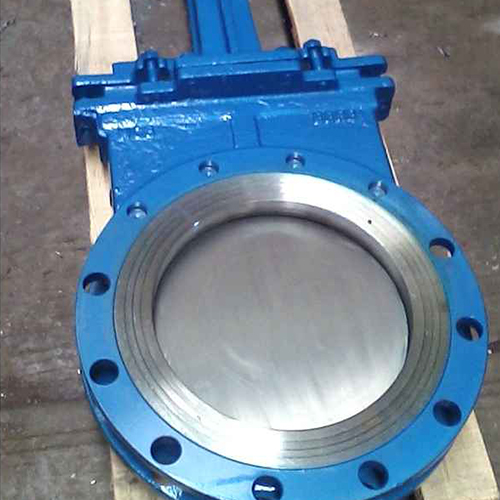
High-velocity fly ash in pneumatic conveying lines degrades standard valve bodies, gates, and seals at an alarming rate. Abrasion and erosion wear down the leading edge of the blade and the internal seat. Once the seat is compromised, the loss of seal integrity leads to systemic leaks. The abrasive index of the ash dictates how quickly this wear occurs.
Fly ash particles are essentially microscopic shards of glass. When propelled by compressed air, they act like a sandblaster. They will cut through standard carbon steel in a matter of weeks. You must utilize hardened materials to combat this constant erosion.
Improperly designed gate openings, pocketing, or throat restrictions contribute to material hang-ups, bridging, and flow restrictions in the hopper discharge. When a gate does not provide a full-port opening, it creates a ledge where ash can accumulate.
This leads to arching, where material forms a structural bridge over the opening. It can also cause ratholing, where a small channel of material flows, leaving stagnant ash packed against the walls. Both conditions severely restrict system capacity and require operators to manually hammer on the hoppers to restore flow.
Ash exiting the boiler is extremely hot. Extreme temperatures cause the metal components of the gate to expand. If the gate is not engineered with proper thermal clearances, this expansion leads to binding and seizure. The blade can become locked in the body, rendering the actuator useless.
Engineered clearances and specialized high-temperature alloys mitigate this risk. They ensure smooth operation regardless of thermal fluctuations. You must account for the maximum upset temperature of the boiler, not just the normal operating temperature, when specifying the gate.
Fine ash has a tendency to pack into the gate chest or packing gland. This failure mode prevents the valve from fully closing or opening. As the ash compacts over multiple cycles, it turns into a solid mass that damages the packing material and scores the blade.
This results in fugitive dust emissions escaping into the plant environment. It creates respiratory hazards for plant personnel and requires constant manual cleanup. A gate designed for ash handling must feature a packing arrangement that can be adjusted in-line to stop these leaks as soon as they develop.
Material selection and hardfacing are the first steps in specifying a gate. The blade, body, and seat materials must match the abrasive index of the ash. Tungsten carbide coatings, hardened stainless steel, and specialized alloys are frequently used to extend the lifespan of the wear components.
A standard carbon steel blade will quickly erode in a fly ash application. Hardfacing is an absolute necessity. You should look for a Brinell hardness number that exceeds the hardness of the ash particles. Stellite overlays on the seating surfaces provide excellent resistance to both abrasion and high temperatures.
You must evaluate the gate's performance under positive pressure for dense phase systems and high vacuum for dilute phase systems. The gate must prevent system cross-contamination and pressure drops. A gate designed for gravity flow will not hold a vacuum.
A gate designed for low pressure will leak in a dense phase conveying line. The seal architecture must be matched to the specific pneumatic conditions. In vacuum systems, the atmospheric pressure actually helps push the blade into the seat. In pressure systems, the internal pressure tries to push the blade away from the seat, requiring a more robust mechanical wedging action.
Calculating the necessary breakout force is critical for reliable operation. This calculation must factor in the weight of the static ash column, friction coefficients of the blade against the packed ash, and potential hydraulic head in wet systems.
Undersized actuators will stall, leaving the gate partially open. Oversized actuators can damage the gate structure if the blade encounters an uncrushable obstruction like a large clinker or a piece of refractory brick. The actuator must be sized to provide enough force to shear the ash, but not enough to bend the blade.
Evaluate the design for maintenance accessibility. Quick-replace seals, adjustable packing, and wear components that can be serviced without removing the entire gate assembly from the pipeline significantly reduce downtime.
In-line serviceability means a maintenance crew can replace a worn seat in hours rather than days. This keeps the ash handling system online and productive. Look for gates that feature split bodies or removable side plates that allow access to the internals while the gate remains bolted to the hopper flange.
Assess the gate's capability to meet stringent OSHA, EPA, and local environmental standards for dust containment and workplace safety. Fugitive emissions are no longer tolerated in modern industrial facilities.
The gate must provide a verifiable, dust-tight seal to the atmosphere. This protects workers from silica exposure and keeps the facility within its permitted emission limits. Any gate that relies on a simple stuffing box without live-loaded packing will eventually leak dust and violate these standards.
Standard commodity knife gate valves are not designed for the rigors of ash handling. When contrasted with engineered high-performance pneumatic isolation gates, standard valves fall short in cycle life, erosion resistance, and reliable actuation. A standard valve might last a few months before leaking.
An engineered gate is built to withstand years of abrasive cycling in automated ash systems. The internal geometry of a standard valve creates dead zones where ash accumulates. An engineered gate features a swept body design that eliminates these dead zones, ensuring the blade always has a clear path to the seat.
Modern ash-conveying sequencing relies on automation. High-performance pneumatic models integrate seamlessly with modern Distributed Control Systems (DCS). They are equipped with limit switch feedback, positioners, and remote monitoring capabilities.
This allows the control room to verify that a gate is fully closed before initiating a pneumatic transfer. It prevents blowback and system plugs. Proximity switches are preferred over mechanical limit switches in these environments, as they have no moving parts to jam with dust. The solenoid valves controlling the pneumatic air must also be rated for harsh, dusty environments.
Retrofitting legacy systems presents significant dimensional constraints. Mismatching bolt patterns and flange mating challenges are common when replacing outdated, failing gates in older thermal power plants. A thorough site survey is required before ordering new equipment.
Custom transition flanges are often required to ensure the new gate fits into the existing piping without introducing stress or flow restrictions. If you force a gate into a space that is too small, you will warp the body, and the blade will never seal properly.
Pneumatic actuator failure is frequently caused by wet, dirty, or under-pressurized plant air. Relying on poor-quality air will destroy the internal seals of the pneumatic cylinder. Moisture in the air lines will cause the cylinder internals to rust, leading to sluggish operation and eventual failure.
Specify requirements for dedicated air preparation. This includes Filter-Regulator-Lubricator (FRL) units and local receiver tanks. This ensures the actuator always has the clean, high-pressure air required to shear through the ash column. A local receiver tank provides a buffer of compressed air, guaranteeing the gate has enough volume to complete its stroke even if plant air pressure drops momentarily.
Proper commissioning prevents catastrophic failure upon startup. You must follow a strict procedure before putting the gate into active service.
Verify all flange bolts are torqued to the manufacturer's specifications to prevent body distortion.
Stroke the gate dry multiple times to verify smooth operation without any binding or hesitation.
Calibrate the open and closed limit switches to ensure they accurately reflect the physical position of the blade.
Perform an initial load test with a small amount of ash to verify the seal integrity before filling the entire hopper.
Check the packing gland for any signs of dust leakage during the first few days of operation and adjust as necessary.
Skipping these steps often leads to premature seal wear or automated sequencing errors. If the DCS thinks the gate is closed when it is actually cracked open, it will start the conveying blower and blow ash everywhere.
Isolation gates are critical control points in an AHS. Treating them as commodity components guarantees system unreliability and increased maintenance burdens. You must evaluate your specific operating conditions before making a selection.
Conduct a comprehensive site audit to determine the exact abrasive index, temperature, and pressure requirements of your ash handling system.
Specify hardened materials and self-cleaning seat designs to combat the inevitable erosion caused by fly ash and bottom ash.
Calculate the exact thrust requirements for your actuators to ensure they can shear through static ash columns without stalling.
Integrate proximity limit switches and high-quality solenoid valves to ensure seamless communication with your plant's DCS.
A: The primary function is to provide a reliable, absolute shut-off barrier. It holds back the heavy static load of ash and water, allowing downstream equipment to be safely isolated for maintenance or to control the batch feeding of material into a conveying system.
A: It utilizes hardened leading edges to shear through the ash and specialized, self-cleaning seat designs. The pneumatic actuator provides enough thrust to force the blade into a tight mechanical seal, while the internal geometry prevents ash from packing into the valve body.
A: Jamming is typically caused by undersized actuators failing to overcome the hydraulic thrust, or by ash packing into the gate chest. Prevention requires calculating the correct breakout force for the actuator and utilizing gate designs that displace material rather than trapping it.
A: Engineered gates feature full-port openings that match the diameter of the hopper discharge. By eliminating ledges, pockets, and throat restrictions, the gate allows for smooth, unobstructed mass flow, preventing the ash from bridging or forming narrow flow channels.
A: Generally, no. Standard knife gate valves lack the hardened materials, specialized seats, and robust actuation required for abrasive ash. They wear out quickly, leading to leaks, fugitive dust emissions, and frequent system shutdowns.
A: An isolation gate is designed strictly for on/off service to completely stop or allow material flow. A control valve is used to modulate or throttle the flow rate of the material. Using an isolation gate to throttle abrasive ash will rapidly destroy its sealing surfaces.

