
Views: 0 Author: Site Editor Publish Time: 2025-12-02 Origin: Site


An ash handling system is a critical component of industries like power plants, cement manufacturing, and waste management. These systems are designed to manage the by-products of combustion processes, primarily focusing on the collection, transport, storage, and disposal of fly ash and bottom ash. Ash handling systems help prevent the release of harmful particulates into the environment and ensure that waste is disposed of or repurposed efficiently.
Ash generated in power plants, particularly from coal-fired boilers, is a by-product that can be hazardous if not properly managed. Ash handling systems play a pivotal role in ensuring that these materials are safely handled while minimizing environmental impact. This article explores the different types of ash handling systems, their components, how they work, and the benefits and challenges associated with them.
Ash handling systems can generally be divided into two main categories: dry ash handling systems and wet ash handling systems. There is also a hybrid model that combines both systems for specific operational needs. Understanding the differences between these systems is essential when choosing the right solution for your plant's needs.
In dry ash handling systems, ash is transported and stored without using water. These systems are highly efficient in terms of reducing water consumption and are ideal for plants where moisture content could be problematic.
Air-Cooled and Pneumatic Systems: Air or mechanical conveyance is used to move the ash from the collection points to storage areas or disposal sites.
Reduced Maintenance: As there is no water involved, there is less wear and tear on components due to water erosion.
Lower Water Usage: Dry systems do not require water, making them more environmentally friendly in water-scarce areas.
Environmentally Friendly: Reduced water consumption and lower impact on wastewater treatment systems.
Higher Efficiency: Less water and chemical treatment needed.
Cost-Effective: Lower operating costs compared to wet systems.
Typically used in smaller power plants and locations where water conservation is a priority or the ash is easily handled without the need for moisture.
Wet ash handling systems use water to transport the ash slurry to a disposal area or ash pond. These systems are most commonly found in large power plants where large volumes of ash are produced.
Water-Driven Conveyance: Ash is mixed with water to form a slurry, which is then pumped to designated areas.
Effective Cooling: Water helps cool the ash quickly and reduces the dust generated during handling.
Better for Large Quantities: Wet systems are effective for handling large volumes of ash, especially in large-scale plants.
Handling Large Volumes: Best for power plants that produce large amounts of ash.
Lower Dust Levels: The use of water significantly reduces airborne ash, improving air quality.
Cooling of Ash: The slurry helps cool the ash, making it less abrasive on equipment.
Common in large-scale coal-fired power plants and facilities that need to handle large volumes of ash efficiently.
Hybrid systems combine the best aspects of both dry and wet systems. These systems are flexible and can be adjusted to meet the specific needs of the plant.
Combination of Dry and Wet Methods: Certain types of ash are handled with dry systems, while others are handled with wet methods based on characteristics like particle size and moisture content.
Flexibility: Allows for handling a wide range of ash types and conditions.
Optimized Water Use: Water is used in certain areas of the system while keeping consumption minimal in others.
Flexibility: Can adjust the method based on the specific type of ash and operational conditions.
Cost-Effective: Combines the cost-saving benefits of dry systems with the high-volume handling capacity of wet systems.
Enhanced Efficiency: Optimized for different operational conditions and types of ash.
Used in plants where different types of ash need to be handled, or where efficiency can be improved by using both methods for various types of waste.
An ash handling system consists of several key components that work together to ensure efficient operation. These components include ash collectors, transporters, storage solutions, and disposal systems. Below is a breakdown of these critical parts.
Ash collectors are the devices that capture ash particles from the combustion process. They are typically found directly after the boiler or furnace, where ash is generated.
Mechanical Collectors: These include equipment like bucket elevators and conveyors.
Pneumatic Collectors: These systems use air to collect and move ash. Pneumatic systems are more commonly used for finer particles.
Hydraulic Collectors: Used in wet systems, these use water flow to collect ash from combustion gases.
Ash transporters are responsible for moving the collected ash to storage or disposal areas. These systems vary depending on the type of ash handling system in use.
Screw Conveyors: Used for transporting ash in a dry system. These conveyors work by rotating and pushing the ash along a tube or trough.
Belt Conveyors: Suitable for both dry and wet systems, belt conveyors are often used for larger volumes of ash.
Pneumatic Conveyors: Often used in dry systems, pneumatic systems use air to move ash over long distances without the need for mechanical parts.
Once the ash is collected and transported, it needs to be stored temporarily before disposal or further use. Storage silos and bins are critical for managing the bulk of ash before it is disposed of.
Storage Silos: Large vertical tanks used for holding ash for longer durations.
Bunkers: These are used to hold ash that is temporarily stored before it is moved to the final disposal site or recycled.
Hoppers: These are used to move ash from the collection point to storage or further transport.
Disposal systems are responsible for the final removal or recycling of ash. Ash can be disposed of in landfills, used in construction, or repurposed for other uses like cement production.
Landfills: Ash is deposited in designated landfill areas, but this is becoming less common due to environmental concerns.
Recycling: Some types of ash, like fly ash, are used in the manufacturing of cement, concrete, and even bricks.
Beneficial Reuse: Ash can be used for soil stabilization, road construction, and more.
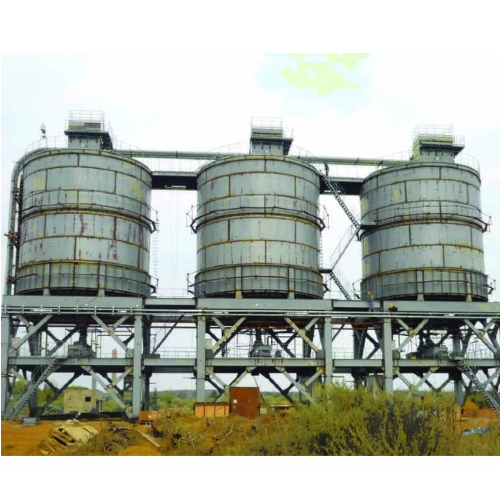
Ash handling systems consist of several integrated steps, from ash generation to final disposal. Here’s how the system works:
Ash is generated during the combustion of fuel in power plants, cement plants, and waste-to-energy facilities. During combustion, the solid fuel is burned, and a portion of it remains as ash. The ash can be classified into fly ash, which is suspended in the exhaust gases, and bottom ash, which settles at the bottom of the furnace or boiler.
Once generated, ash must be collected. In dry systems, mechanical and pneumatic systems are used, while wet systems use water to collect ash. The collection method depends on the ash type and operational considerations.
After collection, ash is transported to storage or disposal locations using various methods. In dry systems, mechanical conveyors or pneumatic systems are used, whereas wet systems typically employ slurry pumps to move ash.
Finally, the collected ash is either disposed of in landfills, repurposed for other uses, or recycled. Some plants use ash in concrete production or other beneficial reuse applications to minimize environmental impact.
Ash handling systems offer numerous benefits that contribute to both operational efficiency and environmental sustainability.
One of the key advantages of ash handling systems is their ability to reduce environmental impact. Proper ash management helps minimize dust emissions, reduces water usage, and ensures that ash is disposed of or recycled properly. This helps meet regulatory standards and ensures compliance with environmental guidelines.
Efficient ash handling systems reduce downtime, improve plant performance, and lower operational costs. Automated systems reduce the need for manual labor, and consistent ash removal ensures that the plant operates at optimal capacity.
Many countries have strict regulations governing waste management, including the disposal of ash. An effective ash handling system ensures that these regulations are met and reduces the risk of penalties or environmental fines.
Despite their advantages, there are several challenges associated with ash handling systems:
Ash is often abrasive, which can lead to wear and tear on the equipment. This requires frequent maintenance and can shorten the lifespan of the system components.
Installing an ash handling system can be expensive, particularly when using advanced wet or hybrid systems. However, the long-term benefits often outweigh the initial costs.
Proper disposal of ash is a significant concern. While recycling efforts have made strides, the safe disposal of ash in landfills or other waste sites still remains a challenge in some regions.
Ash handling systems are essential for the safe, efficient, and environmentally responsible disposal of ash across various industries. By understanding the different types of systems—dry, wet, or hybrid—and selecting the most appropriate one for their specific requirements, facilities can ensure compliance with regulations while optimizing operational efficiency. An effective ash handling system not only helps in reducing environmental impact but also contributes to enhanced productivity and sustainability.
For businesses looking to improve their ash handling processes, it’s crucial to work with experts who can provide tailored solutions. KCY offers innovative ash handling systems designed to meet the unique needs of your facility. Their team of specialists can guide you through selecting and implementing the right system, ensuring optimal performance and environmental compliance. Whether you’re looking for efficiency improvements, cost savings, or better sustainability practices, reaching out to KCY will provide the expertise and support needed to enhance your operations.
A1: The two primary types of ash produced in power plants are fly ash, which is carried away by exhaust gases, and bottom ash, which collects at the bottom of the boiler.
A2: Wet ash handling systems are preferred in large plants because they can handle large volumes of ash efficiently and help cool the ash, reducing dust emissions.
A3: Yes, fly ash can be repurposed for various uses, such as in concrete manufacturing, road construction, and as an additive in cement production.
A4: Ash handling systems minimize dust emissions, conserve water, and ensure proper disposal or recycling of ash, which helps reduce the environmental impact of power plants.
A5: Regular maintenance, using the right materials for ash transport, and ensuring the correct system for your specific plant can help improve the efficiency of your ash handling system.


