
Views: 0 Author: Site Editor Publish Time: 2026-07-29 Origin: Site


In industrial bulk material handling and pneumatic conveying, specifying the wrong flow control valve leads to fugitive dust emissions, pressure loss, and catastrophic maintenance bottlenecks. Engineering and procurement teams frequently conflate the terms "slide gate" and "isolation gate." Treating a general-purpose metering mechanism as a safety shut-off component results in premature seal failure, compliance risks, and unplanned downtime. Plant operators need reliable equipment to keep production lines moving without compromising worker safety or environmental standards. This guide breaks down the technical distinctions between standard slide gates and dedicated isolation valves. We provide a framework to evaluate sealing requirements, actuation methods, and system reliability for your specific application. You will learn how to match valve specifications directly to your operational demands, preventing the chronic leaks and jammed blades that plague poorly designed material handling systems.
Mechanism vs. Function: A slide gate describes the mechanical action (a blade sliding across an opening), whereas isolation gates are defined by their function (providing a complete, fail-safe seal to separate system components).
Sealing Tolerances: Standard slide gates manage bulk material flow and metering, while isolation gates are engineered for absolute shut-off, often requiring gas-tight or dust-tight seals against pressure differentials.
Application Specificity: High-performance pneumatic isolation gates are mandatory for maintenance safety (lockout/tagout) and pressure vessel isolation, whereas standard slide gates are suited for gravity-fed hopper discharge and volumetric metering.
Cost Implications: Over-specifying an isolation gate for a simple gravity discharge wastes capital, while under-specifying a standard slide gate in a pressurized line guarantees expensive seal degradation and system leakage.
A slide gate is defined primarily by its mechanical design. It features a flat rectangular or circular blade driven linearly to intersect a material flow path. The blade slides across an opening to restrict or allow the passage of bulk materials. These valves are ubiquitous in industrial environments due to their straightforward operation and reliable performance in basic flow control scenarios. You will find them under silos, hoppers, and mechanical conveyors where gravity does the heavy lifting.
The primary use cases for standard slide gates involve gravity flow control, volumetric metering, and bulk material shut-off. They excel at managing the discharge of dry bulk powders, pellets, and granules. In these applications, the primary force acting on the material is gravity. However, standard slide gates have distinct design limitations. While they effectively hold back solid materials, they are not engineered to hold back high air or gas pressures. Using them in pressurized environments leads to immediate blow-by and seal failure. The polymer seals simply cannot withstand the force of a pneumatic conveying line.
When you install a standard slide gate, you are installing a flow regulator. It acts like a traffic cop for your bulk solids. If you need to slow down the feed rate of plastic pellets into a gravimetric blender, a slide gate does the job perfectly. It modulates the opening, allowing a specific volume of material to pass through per minute. But if you need to stop a 15 psi air stream from blowing dust back up into your silo, this valve will fail. The air will find the path of least resistance, which is usually right past the blade and through the packing gland.
Unlike standard slide gates, isolation gates are defined by a functional imperative. They are designed specifically to completely seal off a portion of a system, preventing the passage of material, air, or gas. The goal is absolute containment and separation of system zones. While there is a mechanism overlap—many isolation valves utilize a sliding blade—they incorporate specialized seating, heavy-duty frames, and advanced packing glands to achieve a superior seal.
The primary use cases for these specialized valves include maintenance isolation, pressure vessel sealing, and emergency system shut-offs. When technicians need to service downstream equipment, an isolation valve ensures that no material or hazardous gases can bypass the shut-off point. This fail-safe separation is mandatory for operational safety and regulatory compliance. You cannot perform lockout/tagout procedures on a pneumatic line with a leaky valve. You need a guaranteed physical barrier.
We see these valves deployed in dense phase pneumatic conveying systems handling abrasive materials like cement or fly ash. In these setups, the valve must close through a standing column of material and then hold back significant air pressure. To achieve this, manufacturers use machined metal-to-metal seats, inflatable elastomer seals, or live-loaded packing glands. These components work together to create a barrier that stops both the bulk solid and the conveying air. If the valve leaks, the conveying system loses pressure, the material drops out of suspension, and the line plugs.
To fully understand flow control, we must contrast these gates with diverter valves. Diverter valves are engineered to route dry bulk materials from one source to multiple destinations, or converge multiple lines into one. They actively change the direction of the material stream during operation. A common example is a wye-line diverter sending flour from a single storage silo to three different mixing lines.
In contrast, slide and isolation valves do not redirect flow. They halt, meter, or completely shut off the flow within a single line. In complex pneumatic conveying systems, diverters and isolation valves are often used in tandem. A diverter routes the material to a specific silo, while an isolation valve sits below the diverter to completely seal off the inactive legs. This combination maintains system pressure and prevents cross-contamination between different product batches.
Consider a plastics compounding facility. They might use a diverter to send natural polyethylene pellets to extruder A or extruder B. But they will place an isolation valve directly above the rotary airlock feeding the conveying line. This allows them to shut off the material flow, empty the line, and perform maintenance on the airlock without emptying the entire 100,000-pound storage silo. The diverter handles the routing; the isolation valve handles the containment.
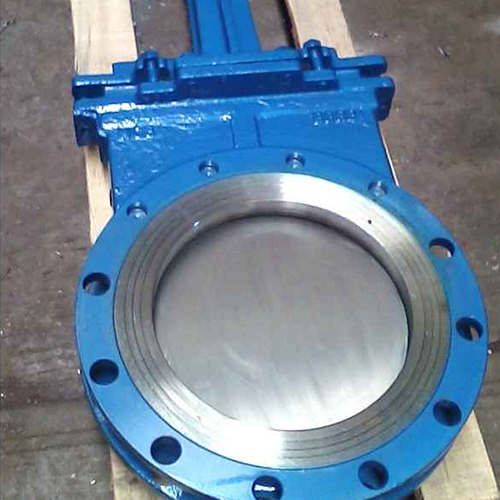
The most significant technical difference lies in sealing capabilities. Standard slide gate seals typically utilize basic polymer or felt materials. These seals are designed to keep bulk solids within the material stream but allow minor air displacement. They are not built to withstand pressure differentials and will leak air or gas if subjected to pneumatic conveying pressures. Over time, the friction of the blade sliding back and forth wears down the felt or polymer, increasing the leakage rate.
Conversely, isolation valve seals are engineered for zero-leakage or strictly defined acceptable leakage rates. They often employ inflatable seals, live-loaded packing, and machined metal-to-metal seating to create an impenetrable barrier. Proper seal specification directly impacts operational outcomes. A robust seal prevents fugitive dust, aiding in combustible dust compliance, and maintains the required pressure for efficient pneumatic conveying.
Feature | Standard Slide Gate | Isolation Gate |
|---|---|---|
Primary Function | Metering and gravity flow control | Absolute shut-off and pressure sealing |
Seal Material | Felt, basic polymers, UHMW | Inflatable elastomers, live-loaded packing, hardened metal |
Pressure Rating | Atmospheric (Gravity only) | High pressure (15+ psi / 1+ bar) |
Leakage Tolerance | Allows minor air/gas displacement | Zero-leakage or strict dust-tight/gas-tight specs |
Actuation Force | Low to moderate | High (must shear through material columns) |
When evaluating seals, you must look at the packing gland design. A standard gate might have a simple stuffing box that requires manual tightening as the packing wears. An advanced isolation valve uses live-loaded packing. Belleville washers apply constant pressure to the packing material, automatically compensating for wear and thermal expansion. This keeps the seal tight against the blade without requiring constant maintenance intervention.
We must distinguish between dry bulk handling and liquid handling. Standard knife gate valves are engineered for liquid, slurry, or wastewater applications. In these designs, a beveled blade cuts through viscous fluids to seal against an elastomer seat at the bottom of the valve body. The liquid easily displaces around the blade as it closes.
Applying a liquid knife gate to a dry bulk process usually results in failure. Dry bulk powders, pellets, and granules pack under pressure. When a standard knife gate closes on dry material, the powder is forced into the bottom seat. The material cannot displace like a liquid. It compacts into a solid mass, preventing the blade from closing fully and causing the gate to bind. Slide gates and isolation valves designed for dry bulk utilize specific blade geometries, displacement pockets, and material deflectors to prevent powder packing and ensure the blade can close completely without jamming.
A displacement pocket is a void space cast or machined into the valve body at the end of the blade's stroke. As the blade pushes material forward during closure, the material falls into this pocket rather than compacting against the frame. When the valve opens again, the material drops out of the pocket and back into the process stream. This simple mechanical feature prevents the catastrophic jamming that occurs when you use the wrong valve type for dry solids.
Actuation methods vary significantly based on the valve's function. Standard slide gate actuation often relies on manual handwheels, chain wheels, or basic pneumatic cylinders suitable for simple open, close, or metering functions. The force required is generally limited to pushing through gravity-fed material. If the gate jams, an operator can usually back it off manually and clear the obstruction.
In contrast, a High-Performance Pneumatic Isolation Gate requires robust, fail-safe pneumatic cylinders. These actuators must be capable of shearing through standing columns of dense material without stalling. Furthermore, they are frequently integrated with limit switches and PLC feedback systems to provide automated safety interlocks. The system must know the exact position of the blade at all times to prevent accidental discharge or pressure release.
We size these actuators based on the material's bulk density, the head load above the valve, and the friction coefficient of the blade passing through the seals. An undersized cylinder will stall halfway through the stroke, leaving the valve partially open. This creates a high-velocity leak path that will destroy the seals in a matter of hours. We always specify oversized cylinders with dual-coil solenoid valves to ensure the gate has the power to close and stay closed under all operating conditions.
Handling abrasive materials requires specific design considerations. Standard slide gates often manage wear through replaceable polymer liners that protect the valve body. However, isolation valves must protect their critical sealing surfaces from abrasive blast to maintain their pressure-tight integrity. They often feature shielded seals or hardened metal seats that resist degradation from abrasive particles like silica sand or alumina.
When handling sticky or cohesive materials, there is a high risk of material packing in the gate body. Isolation designs mitigate blade jamming by utilizing open-frame architectures or specialized purge ports. These ports clear the seating area during the actuation cycle, ensuring reliable closure even with difficult materials. A continuous air purge creates a positive pressure zone inside the valve body, preventing fine dust from migrating into the packing gland and seizing the blade.
Safety protocols dictate strict equipment specifications. For Lockout/Tagout (LOTO) procedures, true isolation valves are legally and operationally required for safe downstream maintenance. A standard slide gate cannot guarantee that hazardous gases or pressurized materials will not bypass the blade, putting maintenance personnel at risk. If a worker is inside a mixer replacing paddles, the valve above them must provide an absolute physical barrier against the 50 tons of material in the silo above.
Compliance with NFPA and ATEX standards for combustible dust requires specialized equipment. Selecting valves that mitigate combustible dust risks through certified dust-tight enclosures is mandatory in many dry bulk processing facilities. Isolation valves provide the necessary containment to prevent explosive dust from escaping into the plant environment. A fugitive dust cloud created by a leaking valve is a severe explosion hazard. Proper valve specification eliminates this risk at the source.
Understanding the pressure environment is critical. You must assess the pressure above and below the valve. In gravity flow applications, the pressure differential is essentially zero, making standard slide gates perfectly adequate. The only force the valve must resist is the static weight of the material.
In dilute or dense phase pneumatic systems, pressure differentials are significant. Standard slide gates fail in these environments due to pressure blow-by. The air pressure forces its way past the basic polymer seals, leading to system inefficiency, material degradation, and environmental contamination. Isolation valves are engineered specifically to hold back these pressure differentials. They maintain the integrity of the conveying line, ensuring the blower's energy is used to move material, not to push air through a leaking valve.
The operational cycle rate influences valve selection. High-cycle metering applications require valves designed for continuous movement. A slide gate feeding a packaging machine might cycle 20 times a minute. These valves need lightweight blades and low-friction seals to prevent actuator fatigue and premature wear.
Isolation valves are often deployed for low-cycle, high-reliability emergency shut-off or intermittent maintenance isolation. They might only actuate once a month. Their heavy-duty seals are optimized for absolute containment rather than rapid, continuous modulation. The high friction of a gas-tight seal requires more force to overcome, making them unsuitable for high-frequency metering tasks.
Selecting the right valve involves evaluating long-term operational stability. A heavy-duty isolation valve requires a more rigorous initial specification process compared to a commodity slide gate. Facilities must evaluate the operational benefits based on extended seal life, reduced compressed air waste, and avoided regulatory fines for fugitive dust emissions. You are specifying a component designed to last years without major overhauls.
Using a standard gate in an isolation application inevitably leads to rapid seal failure. The continuous leakage of compressed air forces blowers to work harder, degrading system efficiency and increasing energy consumption. Proper specification upfront prevents these chronic operational headaches. You avoid the constant cycle of patching leaks, cleaning up spilled material, and replacing blown-out polymer seals.
Complex isolation valves require specialized maintenance procedures, but they are essential for preventing catastrophic system-wide shutdowns. When an isolation valve functions correctly, it allows a single system leg to be taken offline for maintenance while the rest of the plant continues operating. This modularity keeps production running.
When evaluating features, look for valves designed with maintenance accessibility in mind. Advanced designs feature externally accessible packing glands or removable seal cartridges. These features allow technicians to adjust or replace seals without removing the entire valve assembly from the process line.
Lock out and tag out the pneumatic and electrical supply to the valve actuator.
Relieve any residual air pressure in the conveying line.
Loosen the retaining bolts on the external packing gland access door.
Remove the worn packing material using a specialized extraction hook.
Insert the new braided packing rings, staggering the joints to prevent leak paths.
Reinstall the access door and tighten the bolts to the manufacturer's specified torque.
Restore power and air, then cycle the valve empty to verify smooth operation and seal integrity.
A common implementation risk is material being forced into the gate bonnet during blade actuation, leading to incomplete closure. When the blade retracts, it pulls bulk material into the housing. Over time, this material packs tightly, eventually preventing the blade from fully closing and compromising the seal. This is especially problematic with cohesive materials like titanium dioxide or damp sand.
To mitigate this risk, specify valves with displacement pockets, purge ports, or open-frame designs depending on the isolation requirement. Displacement pockets give the material a place to go, while purge ports allow compressed air to blow the bonnet clean during each cycle. An open-frame design simply allows the material to fall out of the valve body entirely, though this is only suitable for non-hazardous, gravity-fed applications where a secondary catch bin is present.
In high-pressure environments, there is a significant risk of pressure differentials blowing out standard polymer seals over time. Even minor wear on the seal surface can create a channel for high-velocity air to escape. This escaping air carries abrasive dust particles, which quickly erodes the surrounding seal material and the metal valve body itself. This phenomenon, known as wire-drawing, will destroy a valve in days.
Mitigation requires implementing routine seal inspection protocols and specifying advanced sealing technologies. Live-loaded seals that self-adjust as wear occurs, or inflatable seals that actively expand against the blade, provide much higher resistance to pressure-induced degradation. You must also ensure the conveying system operates within the valve's rated pressure limits. Spikes in line pressure caused by material plugs can exceed the seal's holding capacity, leading to instant failure.
Audit your current pneumatic conveying lines and gravity chutes to identify any valves exhibiting pressure leaks, fugitive dust emissions, or frequent jamming.
Document the specific operating parameters for each problematic valve location, including material bulk density, abrasiveness, temperature, and maximum system pressure differentials.
Replace any standard slide gates currently used for maintenance lockout/tagout procedures with certified, fail-safe isolation valves to ensure compliance with plant safety regulations.
Consult with a flow-control application engineer to review your material characteristics and request technical specification sheets for heavy-duty pneumatic isolation valves tailored to your process.
A: Generally no, unless the system is strictly gravity-fed with zero pressure differential and no hazardous or combustible dust requirements. Standard slide gates do not provide absolute air or gas seals and will leak under pressure.
A: High-performance models feature specialized sealing technologies like inflatable or live-loaded seals, heavier construction to withstand pressure, and fail-safe actuation designed to shear through material columns without jamming.
A: No. Knife gates are typically designed for liquids, slurries, and wastewater. Dry bulk isolation slide gates are specifically engineered to prevent dry powders, granules, and pellets from packing into the seals and jamming the mechanism.
A: Maintenance depends on the specific design. Advanced gates feature externally adjustable packing glands or side-access doors, allowing technicians to replace seals while the valve remains in-line, minimizing downtime.
A: Leakage rates vary by specification, such as ANSI/FCI classes. True isolation gates in pneumatic systems are often engineered for zero-leakage or dust-tight and gas-tight tolerances to maintain system pressure and safety.

