
Views: 0 Author: Site Editor Publish Time: 2026-08-28 Origin: Site


Handling industrial slag presents formidable operational challenges. Operations face extreme temperatures, highly abrasive particulates, and heavy shock loads daily. Relying purely on reactive maintenance inevitably leads to catastrophic equipment failures. These sudden breakdowns cause severe production bottlenecks and introduce serious safety hazards. Facilities must transition away from outdated break-fix routines. You need an evidence-based preventive maintenance framework to survive. This proactive approach catches minor component wear early. It stops small issues from spiraling into system-wide halts. We aim to provide operations and maintenance directors with a definitive checklist. You will discover practical evaluation criteria to maximize uptime across your plant. We will also help you assess your legacy systems thoroughly. You will learn exactly when your operation requires an upgrade to a more robust, high-performance alternative.
Slag’s abrasive and thermal properties accelerate wear on chains, sprockets, and wear plates exponentially faster than standard bulk materials.
A structured preventive maintenance (PM) plan reduces unplanned downtime by catching micro-failures (e.g., bearing seal degradation) before they cause system-wide halts.
When evaluating new equipment, a "High Performance Slag Conveyor" should be judged heavily on its engineered maintainability—such as accessible inspection hatches and auto-lubrication systems.
Safety and compliance (dust mitigation, strict Lockout/Tagout protocols) are non-negotiable foundations of any slag conveyor maintenance schedule.
Understanding the unique physical properties of slag is crucial. Slag creates a uniquely hostile operating environment. First, it features razor-sharp edges. These edges act like milling tools against metal surfaces. They gouge troughs and destroy belt covers rapidly. Second, slag possesses a remarkably high bulk density. This density places immense torque requirements on your drive systems. Third, latent heat presents a hidden danger. Slag often retains internal temperatures exceeding several hundred degrees. This extreme heat bakes protective coatings. It melts synthetic bearing seals and degrades lubrication prematurely. These three factors guarantee rapid degradation.
You must calculate the financial impact of unplanned downtime accurately. Reactive maintenance destroys operational budgets. Halted production stops revenue generation instantly. Emergency repairs require expensive expedited shipping for replacement parts. Maintenance crews often work costly overtime hours during sudden failures. Conversely, scheduled preventive maintenance offers highly predictable costs. You can align repairs during planned plant outages. This strategy protects your profit margins effectively.
Many plant managers fall victim to the lifecycle fallacy. They ignore minor component wear to save time. They wrongly assume small parts will survive until the next major turnaround. This dangerous assumption leads to premature failure of major structural assets. Consider a simple jammed return roller. It stops spinning and begins dragging against the conveying medium. This friction increases the overall drag on the system exponentially. The primary drive motor must pull a significantly heavier load. Over time, the motor overheats and destroys its internal windings. You just sacrificed an expensive drive motor because you ignored a cheap roller.
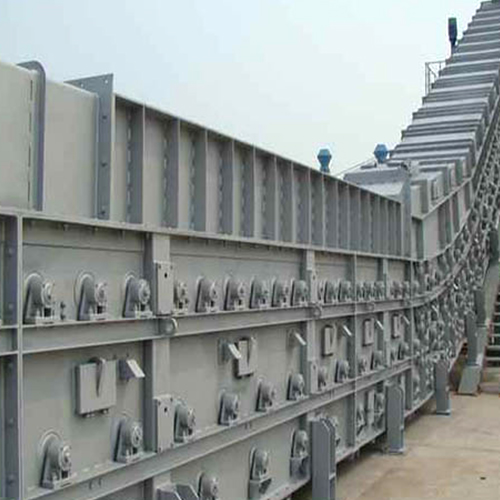
Mechanical components bear the brunt of operational abuse. You must inspect them relentlessly. A reliable Slag Conveyor requires strict adherence to inspection schedules to maintain optimal performance.
Your sprockets dictate the movement of the entire system. Inspect them for abnormal tooth wear daily. Look for hooked teeth or asymmetrical grinding patterns. Verify proper alignment between the head and tail sections. Misalignment forces the chain to climb the sprocket aggressively. You must also check for thermal expansion impacts. Hot materials cause metal components to expand significantly. This expansion alters critical engineering tolerances. It often causes components to bind or rub unexpectedly.
The conveying medium handles continuous direct material contact.
Chain Systems: Monitor your chain tension closely. Look for aggressive pin and bushing wear. Watch for signs of elongation or stretching. Chains naturally stretch as internal components wear down.
Belt Systems: Check vulcanized splice integrity regularly. Look for heat blistering across the top cover. Watch out for edge fraying caused by poor tracking. Replace damaged sections before they snap.
Bearings keep rotating assemblies moving smoothly. Identify abrasive dust ingress early. Inspect your bearing seals for any compromises. Damaged seals allow silica dust to mix into the grease. This mixture creates a destructive grinding paste. Understand your frequency requirements for high-temperature grease application. Standard lubricants burn off quickly. You must apply specialized grease designed for high thermal loads.
Drive units provide the necessary torque to move heavy loads. Utilize vibration and acoustic analysis tools. These tools detect internal grinding long before humans hear it. Monitor operating temperatures constantly. Check your gearbox oil levels frequently. Low oil causes immediate torque strain and gear pitting.
Daily and Weekly Mechanical Inspection Chart
Component | Daily Checks | Weekly Checks |
|---|---|---|
Sprockets & Pulleys | Visual alignment, listen for grinding | Measure tooth wear, check thermal expansion |
Conveying Medium | Check for edge fraying or jumping | Measure chain tension and elongation |
Bearings | Acoustic monitoring for squeaks | Inspect seals, apply high-temp grease |
Motors & Gearboxes | Monitor exterior temperatures | Check oil levels, perform vibration analysis |
Casings and structural frames hold the entire system together. They suffer from continuous abrasive attacks. You must evaluate structural thickness proactively.
Wear plates degrade silently under moving material. You should use ultrasonic thickness gauges. These devices monitor the degradation of abrasion-resistant (AR) steel liners accurately. Do not rely on visual estimates. Visual checks miss thinning metal beneath dust layers. Identify localized hot spots carefully. These spots represent areas where impact or friction peaks. Material drop zones usually show the highest wear rates. Directional transfer points also degrade rapidly. Replace liners in these specific zones proactively.
Cleaning mechanisms keep the system running efficiently. Check your scraper blade tension often. Remove any material buildup immediately. Ensure carryback remains minimal. Carryback material travels backward on the return run. It drops into tail pulleys and causes severe secondary damage. It also buries return idlers in abrasive debris.
Dust sealing controls environmental spillage. Evaluate your skirt boards and containment casings. Check all seals for gaps or rips. Good sealing frameworks ensure strict regulatory compliance. They prevent hazardous silica exposure for your workers. Particulate containment also reduces manual cleanup labor significantly. Maintenance teams spend less time shoveling spilled material.
Sometimes basic maintenance cannot save a failing system. You must assess whether a legacy machine requires complete replacement. Use a features-to-outcomes framework. Evaluate what a modern replacement offers your operation.
Maintainability matters most during emergency repairs. Ask yourself critical design questions. Are inspection doors strategically placed? Can workers open them safely during a shift? A true High Performance Slag Conveyor utilizes modular wear parts. You can swap these components easily. You avoid total system teardowns completely. This modularity saves countless days of maintenance labor. Your teams work faster and safer.
Automation transforms your maintenance return on investment. Specify systems equipped with automated lubrication networks. These systems deliver precise grease amounts constantly. They eliminate human error entirely. Add integrated vibration and temperature sensors. This hardware enables Condition-Based Monitoring. Sensors detect microscopic anomalies instantly. They alert your team before catastrophic failures occur.
Examine the material selection closely. Verify the use of proprietary hard-faced alloys. Do not accept standard carbon steel in high-impact zones. Advanced alloys resist abrasive gouging effectively. They withstand extreme thermal cycling much better. Upgraded materials extend the lifespan of your wear plates dramatically.
Executing a reliable protocol involves overcoming complex human factors. Good plans often fail during actual execution. You must address operational friction directly.
Adoption friction derails many planned maintenance schedules. Why do these schedules fail so often? Facilities frequently lack sufficient personnel. Teams suffer from poor procedural documentation. You must systemize your routines. Use a Computerized Maintenance Management System (CMMS). A CMMS automates your daily work orders. It tracks spare parts inventory automatically. It forces accountability across your entire maintenance department.
Safety risks demand strict operational protocols. You must enforce mandatory Lockout/Tagout (LOTO) procedures. Verify a true zero-energy state before opening any casings. Slag environments introduce severe heat dangers. Manage confined space entry rigorously. Implement strong heat-stress protocols for your maintenance crews. Monitor hydration and mandate frequent cooling breaks. Never compromise on these safety foundations.
Establish a performance baseline early. Log your operational data immediately after installation. Record standard motor amperage under normal loads. Capture acoustic vibration signatures. Document baseline gearbox temperatures. This data sets a critical benchmark. You use this benchmark for all future wear analysis. You cannot track mechanical degradation accurately without a solid starting point.
Effective maintenance of a slag conveyor requires specific attention to abrasive wear, tensioning, and thermal degradation. Your daily mechanical checks dictate long-term reliability. Advise your teams to audit their current maintenance logs thoroughly. If failure intervals are shrinking, recommend shortlisting engineering partners immediately. Evaluate retrofit options carefully. Look to spec a modern, high-performance system designed for harsh-environment reliability.
A: Visual and acoustic checks should be daily; mechanical tensioning and lubrication weekly; structural thickness and gearbox analysis monthly to quarterly, depending on tonnage and operating hours.
A: Excessive chain slack that cannot be taken up, uneven sprocket wear, and audible grinding or "jumping" during operation.
A: It utilizes specialized heat- and abrasion-resistant alloys, heavier-duty drive systems, and engineered clearances specifically designed to handle dense, sharp, and hot materials without jamming or rapid degradation.

