
Views: 0 Author: Site Editor Publish Time: 2026-07-30 Origin: Site


Premature failure of isolation equipment in abrasive, high-cycle, or corrosive environments leads directly to catastrophic process downtime. Plant operators face severe safety hazards and fugitive emissions when gate components degrade unexpectedly. You must balance upfront capital expenditure with long-term equipment durability to maintain continuous production. Selecting the wrong material for the gate body, blade, or seals accelerates destructive wear mechanisms. Operators routinely observe rapid sliding abrasion, high-velocity erosion, chemical corrosion, and mechanical galling when materials mismatch the application.
To prevent these systemic failures, engineering teams require a systematic framework for evaluating metallurgical properties. You must assess polymer seal options, surface treatments, and structural designs based on field realities rather than theoretical specifications. This technical evaluation guide helps you specify the optimal configuration for industrial material handling and fluid control isolation gates. We will examine how specific alloys, coatings, and elastomers perform under extreme operational stress.
Wear is Contextual: The optimal material depends entirely on the primary wear mechanism—sliding abrasion, heavy impact, chemical corrosion, or thermal degradation.
Blade and Body Divergence: High-performance pneumatic isolation gates often utilize composite material strategies, pairing a ductile body (e.g., carbon steel) with an ultra-hardened blade (e.g., AR400 or Tungsten Carbide coated).
Seals Dictate Lifespan: Even the most durable metal gates will fail if the seal material (elastomer, polymer, or metal-to-metal) is improperly matched to the operating temperature, media characteristics, and sliding face dynamics.
Structural Integrity is Non-Negotiable: Resistance to structural deflection, warping, and denting under high pressure differentials is just as critical as surface hardness for preventing gate binding.
You must identify the exact wear mechanism destroying your equipment before specifying replacement materials. Sliding abrasion occurs when fine abrasive powders, such as silica sand or alumina, scrape across the gate blade during actuation. This continuous friction slowly removes metal from the blade surface and the internal housing. Impact wear happens when heavy aggregates, clinker, or large rocks strike the blade surface from a vertical drop. This kinetic energy causes deep gouging, surface work-hardening, and eventual structural deformation. Galling involves metal-on-metal friction during high-force actuation under heavy material loads. It literally tears microscopic chunks of metal from the sliding surfaces, causing the blade to seize permanently within the frame.
Understanding the flow dynamics of your bulk material is necessary to combat these mechanisms. A gravity-fed chute handling dry cement powder presents a completely different wear profile than a pneumatic conveying line pushing wet fly ash. You must analyze the particle size distribution, bulk density, and flow velocity. Fine particles tend to pack into the gate guides, causing sliding abrasion and binding. Large, jagged particles cause impact damage and require high-yield-strength materials to resist denting.
Operating temperature, line pressure, and cycle frequency dictate the fatigue limits of your chosen materials. High temperatures weaken standard carbon steels and melt standard elastomers. High line pressures force the blade against the downstream seat, increasing friction exponentially during the opening stroke. Rapid cycle frequencies give materials no time to dissipate heat, leading to thermal expansion and accelerated seal wear. You must measure these variables accurately during peak operational loads, not just during steady-state conditions.
You must also evaluate the moisture content and chemical composition of the handled media. Atmospheric exposure accelerates electrochemical corrosion rates, especially in coastal or humid environments. Wet, salty environments destroy unprotected carbon steel in a matter of weeks. Acidic or alkaline slurries require specific alloy selections to prevent rapid pitting and crevice corrosion. Even seemingly benign materials like wood chips can release organic acids that degrade standard steel housings over time.
Heavy falling media and high static line pressures exert massive physical impact on the gate blade. If the blade lacks sufficient stiffness, it will bend under the load. Material stiffness prevents blade deflection. Deflection causes immediate seat misalignment. It leads to rapid seal degradation, material leakage, and mechanical binding. A bent blade will jam inside the housing, rendering the gate useless and requiring a complete line shutdown for extraction.
Engineers must calculate the maximum differential pressure across the gate and select a blade thickness that limits deflection to acceptable tolerances. You cannot rely solely on surface hardness to prevent bending. A thin sheet of AR400 steel might resist scratching, but it will bow under heavy pressure. You must combine high yield strength with adequate material thickness. Structural reinforcement ribs on the gate body also prevent the housing from twisting during installation or under heavy pipeline loads.
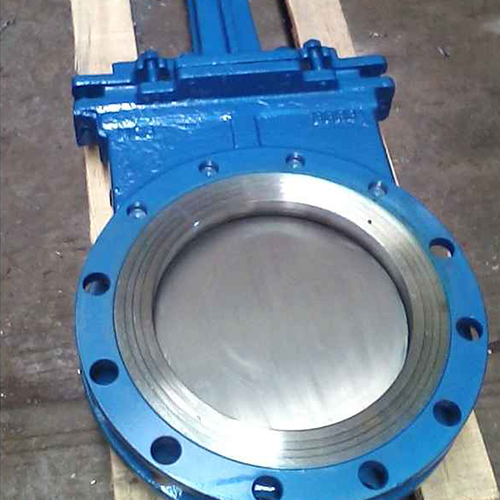
These materials serve as the foundation for baseline industrial environments. You find them handling dry bulk solids, non-corrosive media, and standard agricultural products. They work exceptionally well in outdoor utility installations where extreme abrasion is not the primary concern. Carbon steel offers high structural integrity, excellent weldability, and straightforward machinability. Cast iron provides rigid, heavy-duty housings that resist warping under pipeline stress.
Hot-dip galvanizing protects external carbon steel components from atmospheric corrosion. It resists weathering in outdoor facilities or washdown-heavy plants. The zinc coating acts as a sacrificial anode, protecting the underlying steel even if the surface gets scratched. However, carbon steel remains highly susceptible to internal wear without proper liners. Abrasive media will quickly erode an unprotected carbon steel body. You must specify replaceable wear liners if you plan to use carbon steel housings in high-volume material handling applications.
Stainless steel dominates food-grade processing, chemical manufacturing, and wastewater treatment facilities. It handles highly corrosive fluid media and aggressive washdown chemicals effectively. Grade 304 provides excellent general corrosion resistance for most standard processing environments. Grade 316 and 316L include a specific molybdenum addition. This addition provides superior pitting and chloride resistance, making it mandatory for marine environments or processes involving brines and halogens.
Despite its chemical resistance, standard stainless steel is relatively soft mechanically. It is highly prone to sliding galling unless properly treated. When a stainless steel blade slides against a stainless steel frame under pressure, the protective oxide layers strip away, and the raw metals cold-weld together. You must harden the sliding surfaces or use dissimilar metals for the guides to prevent the blade from seizing. Electropolishing the surfaces can reduce friction and improve cleanability in sanitary applications.
Mining slurry, cement handling, and heavy aggregate processing require extreme mechanical durability. Fly ash systems and coal handling facilities also demand tough, impact-resistant materials. Abrasion-Resistant (AR) steels meet this specific industrial need. The Brinell hardness scale measures their toughness and resistance to indentation. Common grades utilized in heavy industry include AR400, AR500, and AR600.
These hardened steel plates resist deep gouging. They withstand high-impact wear on the gate blade and internal throat liners. Using AR steel drastically extends the operational life of Isolation Gates in brutal environments. However, AR steel is difficult to machine and weld compared to standard carbon steel. You must use specialized cutting tools and pre-heating procedures during fabrication. The increased weight of AR steel blades also requires larger pneumatic actuators to generate sufficient opening and closing force.
Lightweight pneumatic conveying systems often use aluminum housings and components. Gravity flow chutes handling plastics, grains, and low-abrasion environments benefit greatly from this material. Aluminum provides an excellent strength-to-weight ratio, reducing the structural load on the surrounding framework. It features natural atmospheric oxidation resistance, preventing rust without the need for paint or galvanizing.
However, aluminum is highly prone to rapid erosion under high-velocity particle streams. Do not use aluminum for handling sharp, abrasive powders like fiberglass, sand, or heavy rocks. The soft metal will wear through quickly, causing blowouts and material spills. Aluminum is also susceptible to galvanic corrosion if bolted directly to carbon steel or stainless steel without proper isolation gaskets. You must restrict aluminum to clean, dry, and non-abrasive applications.
Engineers use thermal spraying, High-Velocity Oxygen Fuel (HVOF) coating, or plasma transferred arc welding to apply Tungsten Carbide and Stellite overlays. They apply these advanced coatings directly to gate blades, wear rings, and internal deflector cones. This process achieves extreme abrasion and erosion resistance on the specific surfaces that contact the material flow. It avoids the prohibitive cost and machining difficulties of casting the entire gate from solid exotic alloys.
A thin layer of Tungsten Carbide provides the surface hardness of a premium wear alloy while maintaining the ductile strength and flexibility of a carbon steel core. Stellite, a cobalt-chromium alloy, offers exceptional resistance to both wear and high-temperature degradation. These overlays prevent the blade edge from rounding off over time, ensuring the gate maintains a tight seal against the seat. You must ensure the coating process creates a strong metallurgical bond to prevent the overlay from flaking or spalling under heavy impact.
Surface-hardening treatments reduce the coefficient of friction and improve surface hardness without adding significant thickness to the blade. Nitriding diffuses nitrogen into the metal surface at high temperatures, creating a hardened case that resists wear and corrosion. Hard chrome plating adds a slick, highly durable outer layer that repels sticky materials and reduces sliding friction.
These treatments minimize sliding wear during continuous operation. They prevent galling between the blade and the seat during high-pressure actuation. A smooth, hard surface ensures the pneumatic actuator can move the blade without excessive force, reducing air consumption and mechanical strain. Hard chrome plating works exceptionally well in applications handling damp or cohesive powders that tend to build up on raw steel surfaces.
Elastomers provide excellent drop-tight sealing capabilities. They offer resilience against fine powders, conforming to microscopic surface imperfections on the blade to block air and material flow. Polyurethane offers superior tear strength and abrasion resistance, making it the standard choice for dry bulk solids. EPDM handles higher temperatures, hot water, and steam effectively. Nitrile (NBR) is the preferred elastomer for hydrocarbons, oils, and petroleum-based media.
Silicone serves hygienic applications, food processing, and handles extreme temperature fluctuations. However, all elastomers share a common vulnerability: they will shred, tear, or extrude if exposed to sharp, heavy aggregates or excessive pressure differentials. You must protect elastomeric seals from direct material impact using metal deflectors or recessed seat designs. If the material flow directly impinges on the elastomer, the seal will fail rapidly regardless of the compound chosen.
Engineers use various nylon compounds, Polyethylene Terephthalate (PET), and Ultra-High-Molecular-Weight Polyethylene (UHMW-PE) to construct durable sliding liners and low-friction seal faces. UHMW-PE provides an incredibly slick surface that prevents material bridging and reduces the force required to actuate the blade. PTFE (Teflon) provides extreme chemical inertness and handles wide temperature ranges, making it ideal for aggressive chemical processing.
Note PTFE's susceptibility to cold flow under continuous high-pressure loads. It will deform and lose its sealing shape if subjected to constant mechanical stress. A High-Performance Pneumatic Isolation Gate often relies on reinforced polymer composites to maintain a tight seal while allowing smooth blade actuation. Glass-filled or carbon-filled PTFE compounds offer better dimensional stability and wear resistance than virgin PTFE.
Metal-to-metal seating is the mandatory engineering choice for high-temperature service exceeding 400°F (204°C). It is absolutely required for highly abrasive slurries, heavy ores, and glass cullet where elastomers or polymers would be rapidly shredded. This configuration involves a specific operational trade-off. You must accept higher allowable leakage rates (typically FCI 70-2 Class IV or V) compared to soft-sealed configurations.
Metal seats will not provide a bubble-tight seal for gases or thin liquids. However, they will survive extreme conditions that destroy soft seals in hours. Engineers often use a hardened steel blade closing against a slightly softer metal seat, or they hardface both components with Stellite for maximum durability. You must lap the metal seats precisely during manufacturing to minimize the leakage gap and ensure uniform contact across the entire sealing perimeter.
You must map specific material properties directly to your required operational outcomes. High yield strength prevents structural failure under heavy columns of material. Brinell hardness stops abrasive wear from destroying the blade edge. Chemical inertness ensures zero cross-contamination in batch processing. Matching these features correctly extends the mean time between failures and keeps your process running smoothly without unexpected interventions.
Consider the flow characteristics of your media. If you handle cohesive, sticky materials like wet clay or titanium dioxide, you need a blade material with a very low coefficient of friction, such as polished stainless steel or a Teflon-coated surface. If you handle abrasive silica, you need AR steel or Tungsten Carbide. You cannot use a one-size-fits-all approach. Every material selection must solve a specific physical problem presented by the bulk material.
Material density and weight directly affect actuator sizing and air consumption. Heavy cast iron housings and thick AR steel blades require massive pneumatic cylinder bore sizes to generate the necessary thrust. They demand high torque requirements for rotary configurations. Lightweight aluminum allows for smaller actuators, reducing the overall footprint and compressed air usage of the system.
The material weight also impacts structural support framing. Heavy gates require reinforced mounting structures, heavy-duty flanges, and robust pipeline supports to prevent sagging and misalignment. You must factor the total weight of the gate assembly into your structural engineering calculations. Upgrading from a standard carbon steel gate to a heavy-duty AR steel gate often requires modifying the surrounding steelwork to handle the increased load safely.
Food, pharmaceutical, and hazardous environments impose strict material constraints that override standard mechanical preferences. You must follow FDA, USDA, and ATEX compliance rules when selecting materials for these zones. These standards often require electropolished 316L stainless steel for all product-contact surfaces to prevent bacterial growth and facilitate clean-in-place (CIP) operations.
They mandate anti-static, food-grade polymer seals that will not leach chemicals into the product stream. You cannot use standard carbon steel, painted surfaces, or industrial elastomers in these sensitive applications. Furthermore, in ATEX-rated explosive environments, you must select materials that will not generate mechanical sparks during actuation. This often requires specific bronze or polymer guide liners to isolate the moving steel components.
Material Type | Primary Application | Key Strength | Main Limitation |
|---|---|---|---|
Carbon Steel | Dry bulk, outdoor utilities | High structural strength | Poor corrosion resistance |
316L Stainless Steel | Food, chemical, pharma | Excellent corrosion resistance | Prone to galling |
AR400 Steel | Mining, heavy aggregates | Extreme abrasion resistance | Heavy and hard to machine |
Aluminum | Light pneumatic conveying | Lightweight, rust-proof | Low erosion resistance |
Tungsten Carbide Overlay | High-velocity abrasive flow | Maximum surface hardness | Brittle under heavy impact |
Galvanic corrosion occurs rapidly when dissimilar metals touch in the presence of an electrolyte. For example, an aluminum body contacting a stainless steel blade or carbon steel fasteners creates a localized battery effect. This happens frequently within conductive, humid, or corrosive environments, leading to the rapid degradation of the less noble metal (usually the aluminum or carbon steel).
To mitigate this destructive process, specify dielectric isolation gaskets between dissimilar flanges. Apply protective barrier coatings, such as epoxy or polyurethane paints, to the exterior surfaces. Use specialized isolating sleeves and washers for all bolt connections. Alternatively, use uniform material selection throughout the entire gate assembly to eliminate the galvanic potential entirely.
High-temperature applications cause gate components to expand at different rates depending on their mass and material composition. The blade might heat up and expand faster than the heavy cast body. This leads directly to a jammed blade or a compromised seal. The actuator will stall, and the gate will fail to open or close fully.
To mitigate this risk, engineer precise thermal clearances into the machining tolerances. Utilize specialized guide arrangements that allow the blade to float slightly as it expands. Select alloys with matching coefficients of thermal expansion (CTE) for the blade, body, and guides. Proper engineering prevents the gate from locking up when the system reaches its maximum operating temperature.
Operating Condition | Recommended Blade Material | Recommended Seal Material |
|---|---|---|
Standard Dry Powders (Ambient) | Carbon Steel or 304 SS | Polyurethane or EPDM |
Highly Abrasive Slurry | AR400 or Tungsten Carbide Coated | Metal-to-Metal |
Corrosive Chemicals | 316L Stainless Steel | PTFE (Teflon) |
High Temperature (>400°F) | 304 SS or High-Temp Alloy | Metal-to-Metal |
There is no universal material for isolation gates. The optimal choice requires a highly specific engineered response to your facility's exact conditions. You must evaluate the media's abrasiveness, flow velocity, operating temperature, and chemical makeup before making a selection. Follow a strict decision flow to ensure reliability. First, define the chemical and physical characteristics of the bulk material. Second, identify the required seal leakage class for your process. Third, select the blade material and surface treatments necessary for mechanical wear resistance. Finally, select the body material for structural, environmental, and thermal compatibility.
Audit your current gate failures to identify the primary wear mechanism destroying your equipment.
Measure the exact operating temperature and maximum line pressure of your system during peak loads.
Consult with a metallurgist to select the appropriate blade coating for high-abrasion applications.
Upgrade your elastomeric seals to high-performance polymers if you experience frequent blowouts or chemical degradation.
Implement a routine inspection schedule to measure blade thickness and seal integrity before catastrophic failure occurs.
A: Abrasion-Resistant (AR) steels, such as AR400 or AR500, are the best choice. For extreme cases, use a carbon steel blade with a Tungsten Carbide overlay. You must also use metal-to-metal seating, as slurries will destroy soft elastomeric seals rapidly.
A: Stainless steel is relatively soft and prone to galling. When two stainless steel surfaces slide against each other under pressure, friction tears the metal and causes cold-welding. You need to apply a surface hardening treatment, like nitriding, to reduce friction and prevent binding.
A: No. Fly ash is highly abrasive and moves at high velocities in pneumatic systems. Aluminum has poor erosion resistance and will wear out rapidly, causing leaks. You should use hardened steel, cast iron, or coated alloys for fly ash applications.
A: Galvanic corrosion happens when dissimilar metals touch in wet environments. Use dielectric isolation gaskets to separate the metals at the flange connections. You can also apply protective barrier coatings or ensure all components are manufactured from the same alloy.
A: You must use FDA-compliant materials. Food-grade silicone, white EPDM, and specific PTFE (Teflon) compounds are standard. Ensure the seal material can withstand your facility's specific clean-in-place (CIP) chemical washdown procedures and temperature spikes.
A: Generally, you should switch to metal-to-metal seating when continuous operating temperatures exceed 400°F (204°C). Most standard elastomers and polymers will degrade, melt, or lose their structural integrity above this thermal threshold.

