
Views: 0 Author: Site Editor Publish Time: 2025-07-24 Origin: Site


In industrial settings, cooling bulk solids is vital after they exit rotary kilns or dryers to ensure safe packaging, handling, or transport. Rotary coolers provide an efficient and reliable solution, capable of handling large volumes (over 200 tons per hour) and offering flexible designs to meet specific cooling needs. There are two main types of rotary coolers: convective (direct) and indirect water deluge coolers. Both are designed to cool materials but do so in different ways, each offering unique benefits based on factors like material temperature, composition, and required cooling method.
When it comes to industrial process cooling, rotary coolers stand out for their versatility and high-capacity capabilities. Here’s why they are the preferred choice in many industrial settings:
High Throughput Capacity: Rotary coolers can handle a large amount of material, with some systems capable of cooling over 200 tons per hour (TPH). This makes them ideal for industries with high production rates, such as fertilizer manufacturing.
Reliability and Simplicity: Rotary coolers are renowned for their straightforward operation and maintenance. With fewer moving parts and a simple design, these coolers tend to require less maintenance and have a longer lifespan compared to other cooling systems.
High Tolerance for Feedstock Variation: Rotary coolers are built to handle varying feedstock qualities, including differences in material size, moisture content, and temperature. This makes them suitable for a wide range of applications, from agriculture to chemical processing.
Wide Temperature Range: Rotary coolers are capable of handling materials with temperatures ranging from 150°F to over 1000°F. This flexibility is crucial for industries like cement or fertilizer production, where the temperature of materials can fluctuate dramatically.
Customization: Rotary coolers can be tailored to meet specific needs, including modifications for unique material properties or specific cooling requirements. Customization options can include different drum sizes, air flow configurations, and cooling medium types.
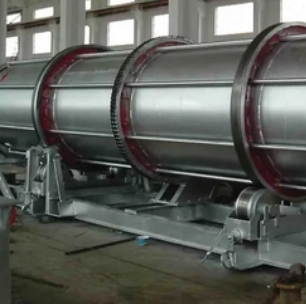
Convective rotary coolers are the most common and widely used type of rotary cooler. They work similarly to rotary dryers, but instead of adding heat, they use cool air to reduce the temperature of materials. Here's how they function:
Working Mechanism of Convective Coolers:
In a convective rotary cooler, the material being cooled and the cooling medium, typically ambient or chilled air, are passed through the rotating drum. As the drum rotates, internal lifting flights (metal blades inside the drum) lift and cascade the material through the incoming air. This design ensures that the material is exposed to the cooling medium for optimal heat transfer.
Direct Contact Between Material and Cooling Medium:
The key characteristic of a convective rotary cooler is the direct contact between the material and the cooling air. The air enters the drum at one end, while the material enters at the other, and they move in opposite directions (counter-current flow). This counter-current design enhances the heat transfer efficiency, as it allows the coolest air to come into contact with the hottest material, improving the cooling process.
Importance of Refractory Lining:
In certain applications, where material temperatures exceed the maximum tolerance of the rotary drum shell, it is necessary to install a refractory lining. Refractory materials can withstand higher temperatures and protect the drum's structure, which is typically made from carbon steel. This lining is usually placed in the inlet portion of the drum, where the material first enters, and it stops once the material reaches a temperature low enough for the drum to handle.
Advantages of Convective Rotary Coolers:
Efficiency: Convective rotary coolers are very efficient for cooling most types of bulk solids, especially when a simple cooling method is required.
Cost-effective: These systems are generally more affordable and easier to operate and maintain compared to other cooling technologies.
Versatility: They can be used across various industries, including cement, chemicals, and fertilizer production, with minor adjustments to suit different materials.
Indirect rotary coolers, also known as water deluge coolers or water-jacketed coolers, work differently from convective coolers. Instead of cooling the material with air, these coolers use water to cool the drum’s exterior, which in turn cools the material inside. Here's a closer look:
Working Mechanism of Indirect Coolers:
In an indirect cooler, the material moves through the rotating drum while a bath of cool water surrounds the drum's exterior. A trough positioned above the drum feeds the water, which is then collected at the bottom of the drum and sent through a heat exchanger to be re-cooled. The cooled water is then recirculated to the trough, where it continues to cool the drum.
Water as a Cooling Medium:
The primary cooling medium in an indirect rotary cooler is water, which is more efficient than air in certain situations. By applying water to the drum's surface, the heat from the material is transferred into the water, effectively lowering the temperature of the material inside.
Materials and Corrosion Resistance:
Since indirect rotary coolers are constantly exposed to water, it’s important that the drum shell is made from stainless steel to prevent corrosion. Carbon steel, which is commonly used in convective coolers, is unsuitable for indirect coolers due to its susceptibility to rust when in contact with water.
Use of Specialty Alloys:
When materials entering the drum are particularly hot, the inlet portion of the drum may require a specialty alloy to withstand the extreme heat. This ensures that the material's temperature doesn’t exceed the design limits of the drum, preventing potential damage or failure.
No Direct Contact with Air:
Unlike convective coolers, the material in indirect rotary coolers does not come into contact with air. This makes indirect coolers ideal for applications where direct air contact could negatively affect the material, such as with highly sensitive or reactive materials.
Deciding between a convective or indirect rotary cooler depends on several factors, including the material being processed, the desired cooling method, and any atmospheric control requirements.
Convective Rotary Coolers:
Best for Standard Cooling Needs: Convective rotary coolers are ideal for cooling bulk materials that can safely come into contact with air.
Applications: Fertilizer production, cement cooling, food processing, and more. They are perfect for materials that can be exposed to air without issue.
Indirect Rotary Coolers:
Ideal for Sensitive Materials: If the material needs to be cooled in an inert atmosphere (such as in the case of certain chemicals) or if it is an ultra-fine material that could become entrained in an air stream, an indirect cooler is the better choice.
Applications: Chemical processing (for inert or controlled atmospheres), fine ceramics, and materials that cannot be exposed to air or could be damaged by air flow.
Rotary coolers are essential for efficiently cooling bulk solids after a rotary kiln or dryer. The choice between a convective or indirect rotary cooler depends on the material being processed and the cooling requirements. Convective coolers are ideal for most industries due to their efficiency and cost-effectiveness. However, when air contact must be avoided or strict atmospheric controls are required, indirect coolers become the better alternative.
To make an informed decision on which rotary cooler configuration best suits your needs, it's important to understand the unique advantages and applications of each. Whether you choose a convective or indirect rotary cooler, both offer high-capacity, reliable cooling solutions that enhance productivity and ensure safe material processing.
For further guidance, expert advice, or to explore tailored rotary cooling solutions, consider reaching out to Qingdao Kechengyi Environmental Protection and Electric Power Technologies Co., Ltd. (KCY). Their team of professionals is well-equipped to assist you in selecting the best cooler system based on your specific industrial needs. Contact KCY today to optimize your cooling process and ensure superior operational efficiency.


